
.png)

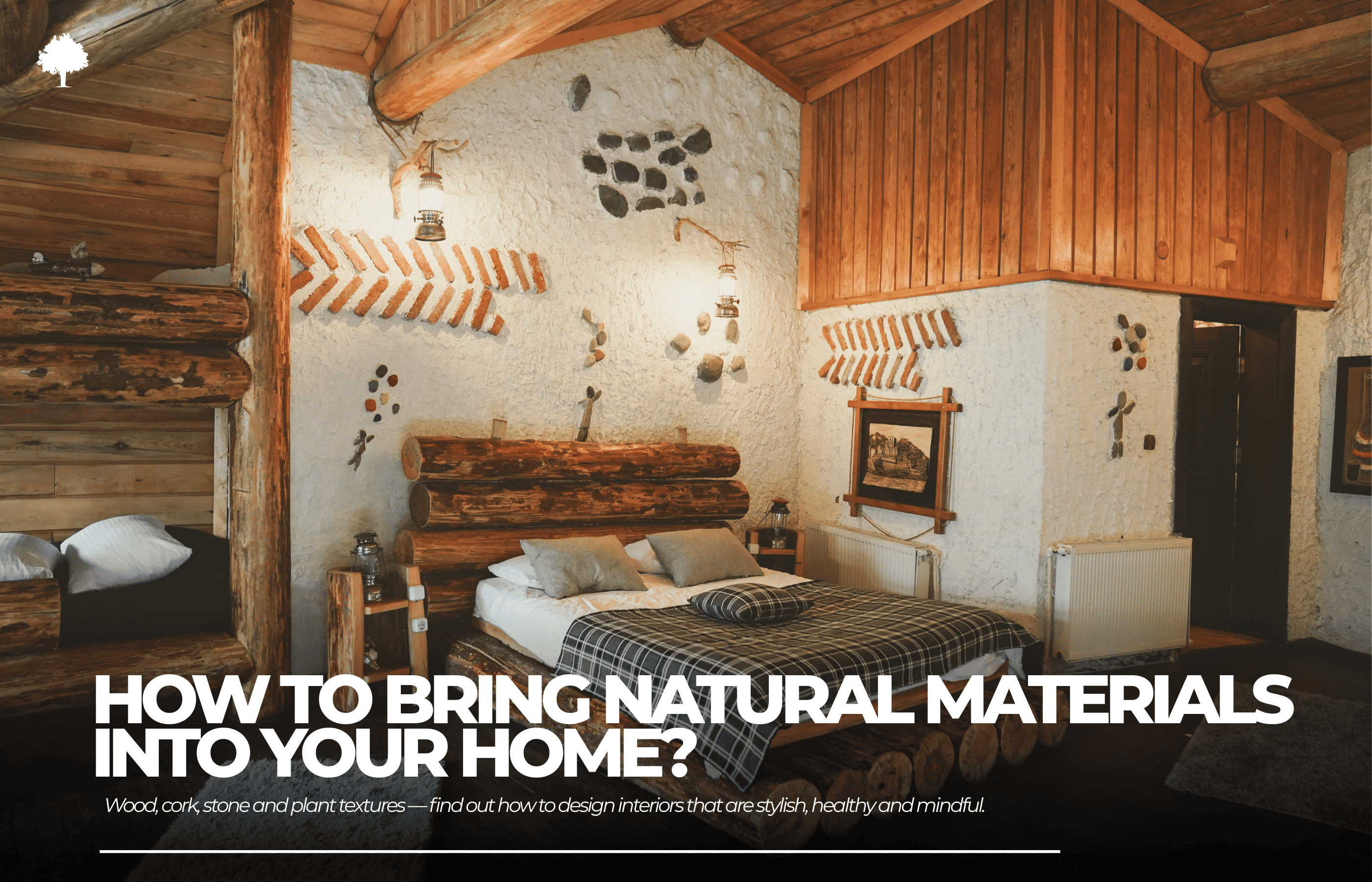
One of the most prominent directions in modern interior design is a renewed appreciation for natural materials – resources that mature gracefully over time while actively supporting a healthier indoor environment.
In this article, we show how natural materials can be incorporated into interiors thoughtfully and with style – not merely for aesthetic appeal, but also to enhance everyday comfort, long-term durability and environmental responsibility.
Table of Contents
1. Introduction
2. Why choose natural materials?
3. Wood
4. Natural cork
5. Stone, ceramics, clay
6. Rattan, bamboo, wicker
7. Summary
8. FAQ
Why surround yourself with natural materials?
How nature influences mental balance and health
A growing body of scientific research confirms that exposure to nature – even indirectly through textures and materials – has a beneficial impact on overall well-being. Natural elements such as wood, stone or organic fabrics bring a sense of calm, harmony and warmth into living spaces. Their presence can help ease stress, sharpen focus and even promote more restorative sleep.
Biophilic design – what it means and why it matters
Biophilic design is a design philosophy that prioritises the relationship between people and nature. It embraces the integration of natural elements – including materials, daylight, greenery, organic shapes and earthy colours – into both residential and commercial interiors. In practice, this goes beyond replacing vinyl flooring with wood; it involves selecting materials that breathe, adapt to their surroundings and develop a natural patina over time. This approach is increasingly popular among those seeking comfort that goes deeper than visuals alone, engaging the senses and emotions as well.
Natural materials as an answer to plastic overload
For many years, interior spaces were dominated by synthetic solutions such as plastics, laminates and artificial composites. While often practical and affordable, these materials rarely match the sensory quality or longevity of natural alternatives. Choosing natural resources is therefore not just about appearance – it is also an expression of values, reflecting concern for health, authenticity and environmental impact.
Wood
Wood is among the most timeless and versatile materials, accompanying human living spaces for centuries. Its distinctive grain, natural colour tones and inherent warmth give interiors depth, elegance and a welcoming atmosphere. At the same time, wood’s properties vary depending on species, finishing technique and application. When chosen wisely, wood can serve reliably for decades, offering both visual appeal and everyday functionality.
Which types of wood suit different interiors?
Selecting the right wood species should take into account both the conditions of the room and its intended use:
-
Oak – extremely durable and resistant to wear and moisture. Well suited for flooring, kitchen worktops and everyday furniture, with a grain pattern that complements both classic and contemporary interiors.
-
Ash – light in tone, flexible and resilient. Ideal for spaces with moderate use, such as bedrooms or home offices.
-
Walnut – darker and highly decorative, often selected for living rooms and statement areas where a sense of sophistication is desired.
-
Larch and pine – softer woods that perform well in relaxation zones, such as bedrooms or children’s rooms, adding warmth and a natural feel.
In moisture-prone areas like bathrooms and kitchens, exotic species such as teak or merbau are worth considering, as they offer natural resistance to humidity.
Raw or oiled – why the finish matters
The method used to protect wood affects not only its look, but also its durability and performance in daily use:
-
Raw wood captivates with its authenticity and natural aroma, but requires careful maintenance, as it readily absorbs moisture and stains.
-
Oiling preserves the genuine appearance of wood while protecting it from water and mechanical wear. The oil penetrates deeply without creating an artificial surface layer, allowing the material to breathe.
-
Varnishing offers increased resistance to scratches, but forms a coating that can alter both the tactile and visual qualities of the wood.
The right finish should always reflect how and where the wood will be used – in high-traffic areas, oiling often provides the most balanced solution.
Small details, noticeable change: shelves and frames
Incorporating wood into an interior does not necessarily require extensive renovations or replacing major furniture pieces. Often, subtle accents are enough to transform the atmosphere:
-
Wooden shelves – minimal in form and mounted on walls or brackets, they enhance both depth and practicality.
-
Solid wood frames for pictures or mirrors act as decorative elements themselves, elevating even the most restrained interiors.
-
Wooden handles, boards, lamps or storage crates – small touches that bring cohesion and a more human feel to a space.
These modest additions are an ideal way to experiment with natural materials without committing to major design changes.
Natural cork
Once primarily associated with pin boards or bottle stoppers, natural cork has regained recognition as a fully-fledged finishing and decorative material. Lightweight, resilient and resistant to moisture, it is also exceptionally environmentally friendly. Visually, it complements both contemporary and traditional interiors, offering distinctive functional and health-related advantages.
What exactly is cork?
Natural cork is harvested from the bark of the cork oak (Quercus suber), a tree native mainly to Mediterranean regions. The harvesting process is entirely non-destructive – the tree remains intact, and its bark regenerates every few years, enabling repeated harvesting over decades. Thanks to its unique cellular structure, composed of millions of air-filled cells, cork is exceptionally light, elastic and resistant to pressure and temperature changes.
Uses: from wall finishes to accessories – much more than boards
Natural cork can be applied in a wide range of forms and settings, extending far beyond its traditional uses:
-
Wall coverings – cork walls provide visual interest while also offering natural acoustic and thermal insulation, making them ideal for bedrooms, children’s rooms and home offices.
-
Floor panels – flexible, pleasantly warm underfoot and effective at dampening footsteps, cork flooring combines comfort with modern aesthetics.
-
Accessories and decorative items – from coasters to furniture and design objects, cork is increasingly appreciated as a stylish and practical material.
Why is cork both eco-friendly and healthy?
Cork is a completely natural, renewable and biodegradable resource. Its production leaves a minimal carbon footprint – trees are preserved, and their presence supports increased carbon dioxide absorption. Importantly, cork does not release volatile organic compounds (VOCs), which are common in synthetic materials and can negatively affect indoor air quality.
With its antistatic and antibacterial properties, cork is particularly well suited to allergy sufferers and families with young children. It does not attract dust, does not retain moisture, effectively reduces noise and helps stabilise the indoor microclimate. It is a material that promotes healthy, mindful and comfortable living, whether in urban settings or beyond.
Stone, ceramics, clay
Materials drawn directly from the earth – including stone, clay and ceramics – have shaped human habitats for millennia. Today, they return in a contemporary form, valued for their refined appearance, minimalist expression and outstanding durability.
Where is stone most effective?
Natural stone such as marble, granite, travertine or slate excels in areas where durability, elegance and resistance to heavy use are essential. Typical applications include:
-
Kitchen and bathroom worktops – marble and granite combine timeless beauty with resistance to heat and scratches.
-
Floors and staircases – stone ages gracefully, lending interiors an enduring elegance and natural character.
-
Wall cladding and fireplaces – especially striking in living areas and hallways, where stone becomes a defining design feature.
-
Outdoor elements – façades, terraces and garden paths built from stone create a seamless transition between home and nature.
Stone is a long-term investment – immune to fleeting trends and synonymous with durability and prestige.
Clay in contemporary interiors: plasters, ceramics and lighting
Clay, once considered a rudimentary material, is experiencing a revival in modern architecture and design. Its versatility and warm character make it an excellent foundation for contemporary finishes:
-
Clay plasters – a natural alternative to paints and smooth coatings. They regulate humidity, remain breathable and antistatic, and their deep matte finish suits bedrooms and living rooms perfectly.
-
Functional and decorative ceramics – handcrafted bowls, vases and tiles bring authenticity and individuality to interior spaces.
-
Clay lamps and shades – the subtly porous structure of clay softens light, creating a warm and atmospheric ambience.
Both raw and refined, clay pairs beautifully with wood, linen and metal, fitting effortlessly into rustic as well as minimalist interiors.
Rattan, bamboo, wicker – lightness inspired by nature
Natural materials do not always need to feel heavy or rugged. Rattan, bamboo and wicker introduce lightness and delicacy while remaining durable and practical. They are ideal for those who want to bring nature into their interiors in a subtle yet noticeable way, whether in city apartments or holiday retreats.
Understanding the differences between these materials
Although often grouped together, rattan, bamboo and wicker differ in origin, characteristics and typical use:
-
Rattan
Sourced from rattan palms native to Southeast Asia, rattan is flexible, durable and easy to shape. It is widely used for woven furniture such as armchairs, sofas and screens, and its natural appearance remains visible even after finishing. -
Bamboo
Botanically a grass rather than wood, bamboo is extremely strong and fast-growing. Its resistance to moisture makes it suitable for kitchens, bathrooms, floors and wall finishes, while its clean structure complements minimalist interiors. -
Wicker
Made from young willow shoots, wicker is commonly used in baskets, lamps, plant covers and small furniture. More delicate than rattan, it is particularly suited to natural, boho and vintage-inspired interiors.
Each material brings a distinct aesthetic: rattan evokes a classic, colonial feel; bamboo leans towards a modern, understated look; and wicker creates a cosy, familiar atmosphere. The final choice should reflect both the interior style and personal taste.
Summary
Bringing natural materials into interior spaces is more than a passing trend – it is a deliberate decision that delivers aesthetic, health and ecological benefits. Wood, natural cork, stone, clay, rattan, bamboo and wicker reflect humanity’s enduring connection with nature while offering practicality and timeless appeal.
In a world saturated with synthetics and constant acceleration, natural materials provide balance. They introduce calm, authenticity and longevity, transforming a house from a purely functional space into a place that supports recovery, encourages connection and fosters harmony with the surrounding environment.
FAQ – Frequently asked questions
1. Are natural materials suitable for modern interiors?
Absolutely. While rooted in tradition, natural materials integrate effortlessly into modern design. With thoughtful choices of form, finish and colour, wood, natural cork, stone, clay or bamboo can enhance minimalist spaces, add warmth or subtly contrast cooler surfaces.
2. Do natural materials need special maintenance?
Some materials, such as wood or clay, do require slightly more care than synthetic alternatives, but maintenance is straightforward. Regular oiling, proper sealing and avoiding excessive moisture ensure long-lasting beauty and durability. In return, these materials offer a quality that artificial substitutes cannot replicate.
3. Are natural materials more expensive?
Initially, yes – solid wood, natural cork and stone often come at a higher cost than synthetic options. Over time, however, they prove to be a worthwhile investment thanks to their durability, timeless appearance and positive impact on property value.
4. Can different natural materials be combined in one space?
Yes – and combining them is highly encouraged. The key is maintaining balanced proportions and a cohesive colour palette. For instance, cork flooring pairs beautifully with stone worktops, linen curtains and wicker accents, creating a harmonious and inviting interior.


