
.png)

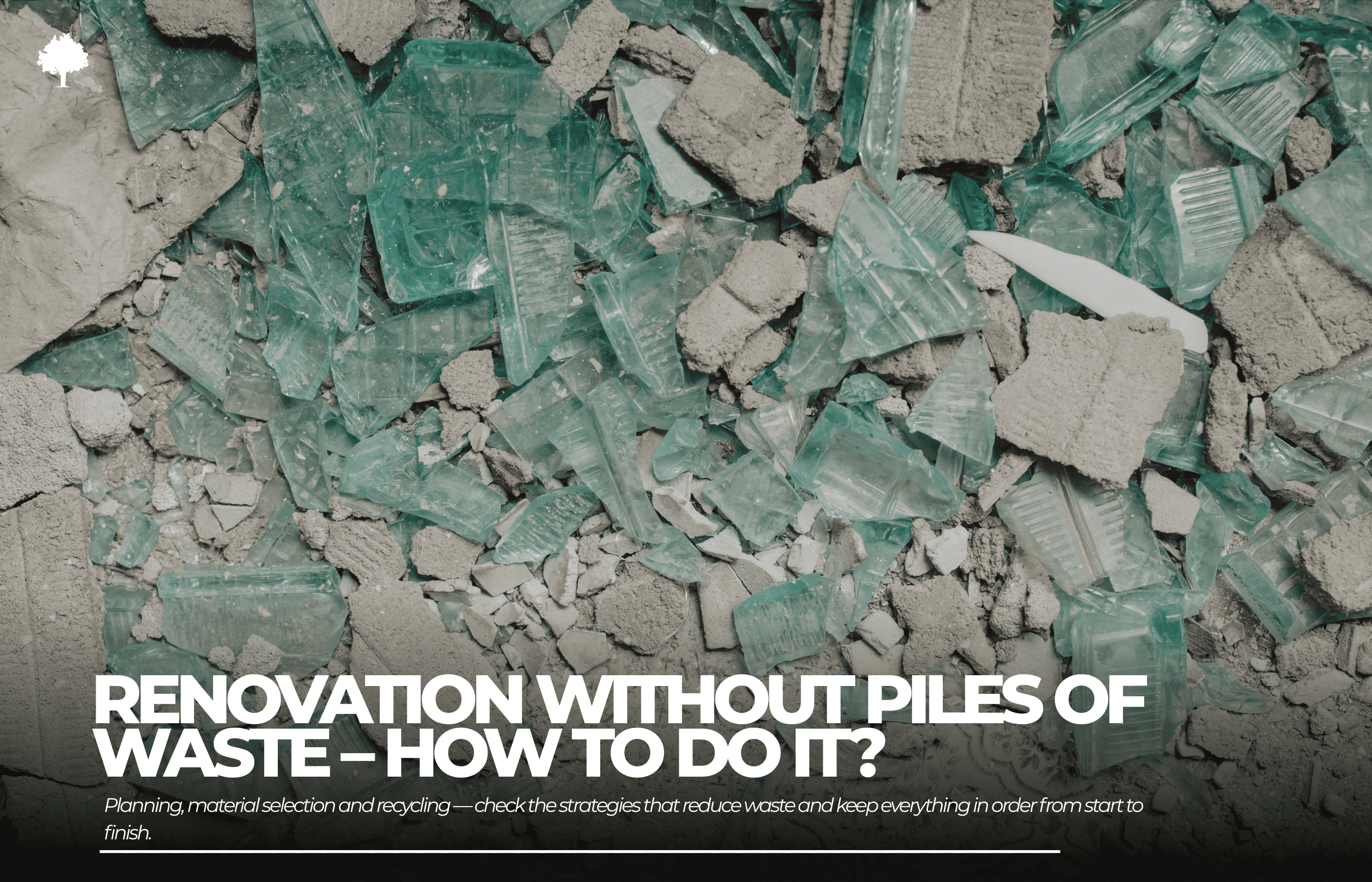
Even the most thoroughly thought-out interior renovation often ends in exactly the same way – with heaps of rubble, cardboard boxes, packaging from construction materials and leftover waste that is difficult, expensive and unpleasant to get rid of.
Is it really possible to renovate without producing tons of waste? Can refined aesthetics go hand in hand with environmental responsibility and efficient logistics? The answer is yes. The foundation lies in smart planning and conscious decisions regarding materials and technologies.
In this article, we explore proven strategies for carrying out a renovation with minimal waste – efficiently, thoughtfully and responsibly.
Table of Contents
1. Introduction
2. Why do renovations generate so much waste?
3. Smart planning
4. Recycling before renovation: what can be saved, restored or sold?
5. Smart shopping – how to buy without throwing things away
6. Summary
7. FAQ
Why do renovations generate so much waste?
The scale of the problem in numbers
Home and apartment renovations are among the largest sources of construction waste in Poland. Data from the Central Statistical Office shows that in 2023 alone, approximately 13.4 million tonnes of municipal waste were generated nationwide, with construction and demolition waste forming a substantial share. While developers account for the biggest volumes, it is often smaller renovation projects – carried out simultaneously in thousands of homes – that prove the least efficient when it comes to waste management.
What ends up in the containers?
Typical renovation waste includes:
-
Rubble – concrete, bricks, plaster, fragments of plasterboard
-
Finishing materials – old flooring panels, carpets, tiles, wallpaper
-
Packaging waste – plastic films, polystyrene, cardboard from paints and adhesives
-
Worn fixtures and joinery – doors, windows, radiators, bathroom ceramics
-
Leftover building materials – unused paints, adhesives and mortars
In many cases, all of these materials are thrown into a single container without any sorting, which severely limits their potential for recycling or reuse.
Environmental awareness vs. on-site reality
An increasing number of people declare their intention to renovate sustainably, opting for recycled products or materials with environmental certifications. In practice, however, there is often a wide gap between intention and execution.
There are several reasons for this:
-
Lack of contractor standards – only a few offer waste segregation or material recovery services.
-
Time pressure – fast-track renovations often leave no room for “zero waste” logistics.
-
Limited infrastructure – many locations lack access to selective waste collection points, and renting multiple containers increases costs.
-
Poor purchasing planning – ordering excessive quantities of materials leads to waste from the very beginning.
As a result, despite good intentions, many renovations still end with a container full of mixed waste destined for landfill.
Smart planning
Precision instead of improvisation
One of the key factors determining how much waste a renovation generates is the quality of planning. Projects carried out “by feel” almost always result in surplus materials, unnecessary purchases and the disposal of perfectly usable products. A carefully planned renovation, on the other hand, means lower stress, reduced costs and far less waste.
Already at the planning stage, it is worth:
-
Creating a detailed project that accurately estimates material quantities and aligns them with real needs.
-
Carrying out a full site inventory – precise measurements reduce ordering errors and the need for corrections.
-
Consulting the contractor – an experienced specialist can suggest ways to optimise material use and minimise losses during cutting, fitting or installation.
Shopping with care
All too often, buyers purchase extra materials “just in case”, overlooking the fact that unused products are rarely returnable – especially if sold loose or damaged during transport.
Instead:
-
Calculate quantities carefully – base them on the design and allow a 5–10% buffer, not 30%.
-
Choose products sold by length rather than by package – this helps avoid leftovers and unnecessary excess.
-
Review return policies – select suppliers that allow unused materials to be returned without additional fees.
Avoid “construction FOMO”
Many investors follow the mindset of “better too much than too little”, which in practice results in dozens of kilos of unused tiles, surplus paint or metres of unused skirting boards. This approach generates not only extra costs, but also tangible waste that is difficult to reuse or sell.
A better rule to follow is simple: measure twice, buy once – and only what is truly needed.
Recycling before renovation: what can be saved, restored or sold?
Before the first hammer strikes the wall, it is worth carefully assessing what is already present in the home. Items often dismissed as rubble or scrap frequently retain real value – functional, aesthetic or material. This approach not only reduces waste, but can also enhance the interior with distinctive, characterful details.
Giving old elements a second life
Many fixtures and fittings can be reused or restored, benefiting both the budget and the environment. The most commonly recovered items include:
-
Doors – solid wood doors, once renovated through sanding and repainting, gain a level of refinement rarely matched by modern composite alternatives.
-
Windows – older wooden frames can often be resealed and restored; for historic joinery, this may even be a conservation requirement.
-
Tiles – vintage cement or ceramic tiles, particularly those in good condition, are now highly valued for their decorative appeal.
-
Cast-iron radiators – classic units, once sandblasted and repainted, become standout features in retro or industrial interiors.
Elements that no longer suit the new design vision can often still be reused – even if not within the same home.
Smart shopping – how to buy without throwing things away
Purchasing materials is one of the most critical stages of any renovation – not only for the final look and budget, but also for environmental impact. Decisions made at this stage directly influence how much waste will be generated during and after the works.
Choose materials that can be dismantled and reused
Some materials, despite being attractively priced, are designed for single use. Removing them leads to irreversible damage, meaning that after years of use they inevitably end up in landfill. A better alternative is to invest in:
-
Click-fit floor panels and boards – which can be removed and reinstalled.
-
Modular kitchen and furniture systems – easy to dismantle, reconfigure and reuse.
By choosing solutions suitable for dismantling or recycling, we invest not only in durability, but also in future flexibility – without generating unnecessary waste.
Reducing packaging: less plastic, fewer problems
A significant share of renovation waste consists of packaging from building materials. Stretch film, plastic buckets from adhesives and paints, and protective polystyrene often fill containers from the very first day.
To reduce this type of waste:
-
Opt for bulk or reusable packaging, such as paints sold in metal tins instead of plastic.
-
Use local suppliers and builders’ yards, where many products are sold loose or with minimal plastic packaging.
-
Order materials cut to size – this reduces surplus material and transport packaging.
A mindful choice of supplier can sometimes deliver greater savings than a retail promotion, once disposal and surplus costs are considered.
The role of natural materials: durability, aesthetics, less waste
Natural materials such as wood, stone or cork are increasingly popular in contemporary interiors. They are not only environmentally friendly, but also highly practical when reducing waste is a priority.
For insulation or finishing, natural cork is well worth considering – it is biodegradable, durable, lightweight and easy to install, which minimises cutting losses and waste. Natural cork does not create dust, does not crumble and can be installed without specialist tools. In addition, cork panels can often be recycled or reused in other interiors.
Choosing natural materials means investing not only in aesthetics, but also in quality and a smaller environmental footprint that will endure for years – both literally and figuratively.
Summary
A renovation without mountains of waste is not just a fashionable idea, but a realistic goal – especially for those who value quality, comfort and responsible choices. Awareness and careful planning are essential: from precise design and thoughtful purchasing to making the most of existing resources.
As demonstrated, reducing waste does not require sacrificing aesthetics or functionality. On the contrary, it often results in more refined, personalised and long-lasting solutions. Recycling, renovation, using second-life materials and investing in natural resources such as natural cork make it possible to renovate in the spirit of modern luxury – elegant, conscious and environmentally responsible.
FAQ
1. Are natural materials always more environmentally friendly?
Not necessarily – it depends on their origin and how they are produced. That said, well-selected natural materials such as cork, wood or wood wool tend to have a lower carbon footprint, are biodegradable and easy to reuse. Natural cork stands out in particular as a durable, lightweight and almost waste-free solution.
2. Is an eco-friendly renovation more expensive?
Not necessarily. While natural or renewable materials may have a higher upfront cost, lower disposal costs, longer lifespan and the possibility of recycling make them economically viable over time. Moreover, by reducing waste and avoiding unnecessary purchases, the overall renovation budget can be significantly reduced.


