
.png)

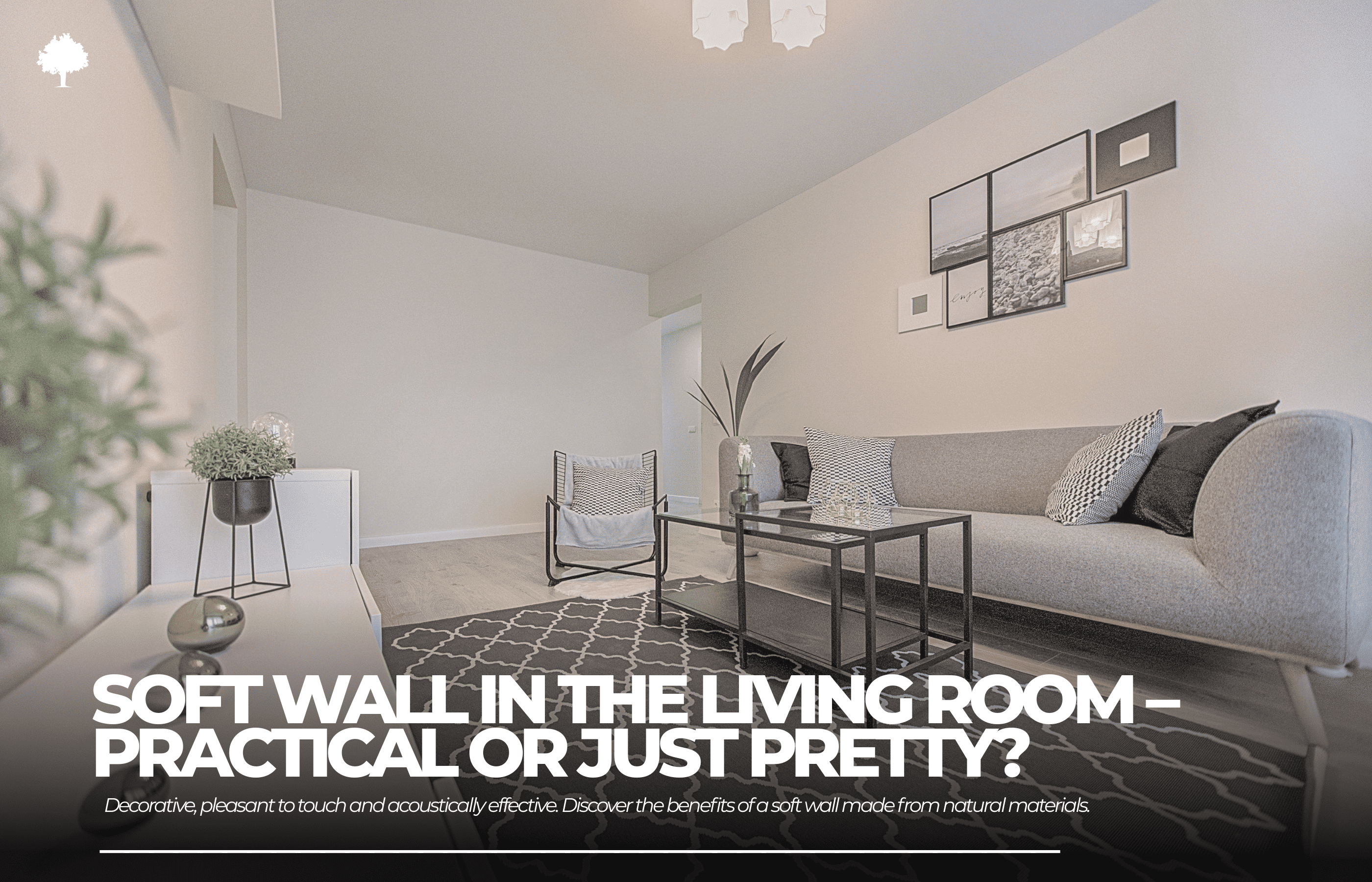
Home design is increasingly seen as more than simply choosing colours or furniture—it has become a holistic process that blends visual appeal with everyday practicality. Among contemporary interior solutions, the so-called “soft wall” is attracting growing interest.
Is a soft wall primarily an aesthetic upgrade, a way to enhance acoustic comfort, or a genuinely practical feature for daily living? In this article, we examine every aspect of this design element to address one key question: is a soft wall in the living room a truly thoughtful decision, or just another short-lived trend?
Table of contents
1. Introduction
2. What are “soft walls”?
3. Why introduce softness to walls?
4. Materials overview
5. Compromise and balance – everything in moderation
5. Summary
6. FAQ
What are “soft walls” and where did the idea originate?
A “soft wall” is a broad term describing wall sections finished with materials that combine decorative qualities with sound-dampening properties. While the concept may appear contemporary, its origins can be traced back to long-established solutions used in luxury hotels and theatre interiors, where visual elegance has always been closely linked with acoustics and a sense of comfort.
In residential interiors, soft walls have emerged as an alternative to traditional wall décor such as artwork, wallpaper, or exposed brick. Rather than serving a purely visual function, they introduce a tactile and practical dimension as well. This reflects the growing demand for multisensory comfort, particularly in areas where we spend the most time—most notably, the living room.
Inspired by design, acoustics, and well-being
The popularity of soft walls has grown alongside the rising focus on well-being in interior design. Designers increasingly highlight the influence our surroundings have on both physical and mental health. Drawing inspiration from Scandinavian interiors, Japanese minimalism, and biophilic design principles, soft panels fulfil not only an aesthetic role but also provide calming and insulating benefits.
Why do walls benefit from softness?
Practical benefits: acoustics, safety, and comfort
Although aesthetics are an essential part of modern interiors, the functional advantages of soft walls are equally—if not more—important. Soft wall finishes help reduce reverberation, make conversations more comfortable, and limit the transmission of noise from adjoining rooms.
Safety is another key consideration, especially in households with children. Soft surfaces cushion accidental impacts and remove sharp edges that could otherwise pose everyday hazards. For families who prioritise comfort and thoughtful design, this offers a way to merge visual appeal with practical function—without compromise.
Soft walls also significantly enhance the perceived warmth of an interior. They visually soften the space, creating a more inviting and relaxed atmosphere—particularly valuable in the living room, which often serves as the heart of family and social life.
The psychology of touch: how texture shapes our mood
Environmental psychology shows that our sense of touch plays a major role in how we experience space. Soft textures are associated with warmth, safety, and relaxation. Contact with pleasant materials has a calming effect on the nervous system, helping to reduce stress and tension. This explains why soft textiles and upholstery are so common in areas dedicated to rest and relaxation.
Materials overview
A soft wall in the living room can take many different forms—from traditional upholstered panels, through contemporary acoustic foams, to natural cork. The intention is not to create a wall that feels like a cushion. Choosing the right material involves balancing aesthetics with the intended function of the space. Below is an overview of popular options that combine tactile comfort, durability, and visual quality, tailored to more demanding users.
Upholstered panels – elegance paired with comfort
Upholstered wall panels are usually made from soft foam cores covered with high-quality fabrics. Popular choices include:
-
Velour – rich in texture and available in a broad colour range. It absorbs sound effectively while adding a sense of refinement.
-
Alcantara – a premium microfibre with a soft, luxurious feel, resistant to stains and wear. Well suited to minimalist and contemporary interiors.
-
Woven and textured fabrics – visually interesting, easy to maintain, and available in allergy-friendly variants.
Acoustic and decorative foams
Produced from materials such as polyurethane, EVA, or melamine foam, these solutions are available as flat panels, geometric modules, or decorative 3D designs.
Their key advantages include:
-
Lightweight construction and easy installation – often self-adhesive, with no drilling required.
-
Contemporary appearance – ideal for minimalist, industrial, or futuristic interiors.
Natural cork
Natural cork is a distinctive material that offers a balance between wall durability and a soft tactile feel. While it is not upholstered in the traditional sense, its structure makes it pleasant to the touch, warm, and welcoming.
Key advantages of cork include:
-
Sustainability – a fully natural, renewable material harvested without damaging trees.
-
Thermal and acoustic insulation – natural cork effectively reduces noise and retains warmth, making it well suited to passive and energy-efficient homes.
-
Low maintenance – easy to clean, antistatic, and resistant to mould and microorganisms.
Thanks to its restrained look and versatility, natural cork fits seamlessly into Scandinavian, Japandi, and modern classic interiors.
Compromise and balance – not all or nothing
In interior design—as in fashion or architecture—the most successful outcomes often come from carefully balancing contrasts. Not every living room needs fully softened walls, and not every homeowner wants an interior that resembles a recording studio or hotel suite. This is why the idea of a balanced middle ground—a considered blend of form and function—has become increasingly appealing to discerning users.
A soft accent wall – when less truly is more
Rather than covering the entire room with soft finishes, it is often more effective to introduce an accent wall—a single surface that draws the eye, sets the atmosphere, and adds comfort. Common locations include the wall behind the sofa, fireplace, or television, though other areas such as entry zones or reading corners can also work well.
This targeted accent:
-
enhances visual appeal without overwhelming the space,
-
helps keep material and installation costs under control,
-
maintains a sense of balance between softness and openness.
For many, this approach offers the perfect solution—delivering all the benefits of a soft wall without the risk of excess.
Cork as a balancing element – a natural compromise
An increasing number of designers are choosing cork—particularly in the form of 3D cork, which combines subtle depth with a warm, touch-friendly surface. It aligns perfectly with the idea of understated luxury: discreet rather than dominant, yet enriching the space. Natural cork can be used on its own or combined with materials such as wood, stone, or textiles.
3D cork is especially effective as:
-
a decorative wall feature,
-
a backdrop for shelving or picture displays,
-
a visual divider in open-plan living spaces.
At the same time, it reflects ecological values that matter increasingly to environmentally conscious homeowners.
Mixing materials: soft and hard for contrast and harmony
One of the most sophisticated design strategies is combining contrasting textures—soft and hard—within the same space. This approach creates visual layering while also enhancing the practical performance of the interior.
Successful combinations include:
-
Soft panels + architectural concrete – the rawness of concrete contrasts with the warmth of upholstery.
-
Velour + natural wood – a timeless pairing that adds depth and elegance.
-
Cork + glass or metal – an eco-conscious accent combined with contemporary minimalism.
Summary
A soft wall in the living room is far more than a decorative statement. It is a deliberate design choice that responds to the evolving expectations of modern users—particularly those seeking interiors that deliver not only visual appeal, but also comfort, functionality, and sensory richness. In the age of human-centred design, living spaces are meant to soothe, protect, support daily routines, and inspire—and soft wall finishes align perfectly with these goals.
FAQ
1. Are soft walls suitable only for modern interiors?
No. Soft walls can be adapted to a wide variety of interior styles—from minimalist to more traditional settings. The key is selecting the right materials and colours.
2. Do soft walls genuinely improve acoustics?
Yes. Upholstered panels and natural cork both absorb sound waves, helping to reduce echo and enhance acoustic comfort. This is especially beneficial in large, open-plan living areas and spaces finished with hard materials such as glass, stone, or concrete.
3. Is it possible to install a soft wall yourself?
Many soft wall systems—particularly modular or self-adhesive ones—are designed for straightforward installation. For more complex projects, however, professional assistance is recommended to ensure precision and long-term durability.
4. Can cork truly replace soft upholstery?
Natural cork is not as soft as fabric upholstery, but it provides a pleasant texture, natural warmth, and moderate sound absorption. For those who value eco-friendly materials and subtle design, natural cork—especially in 3D form—offers an excellent middle ground.


