
.png)

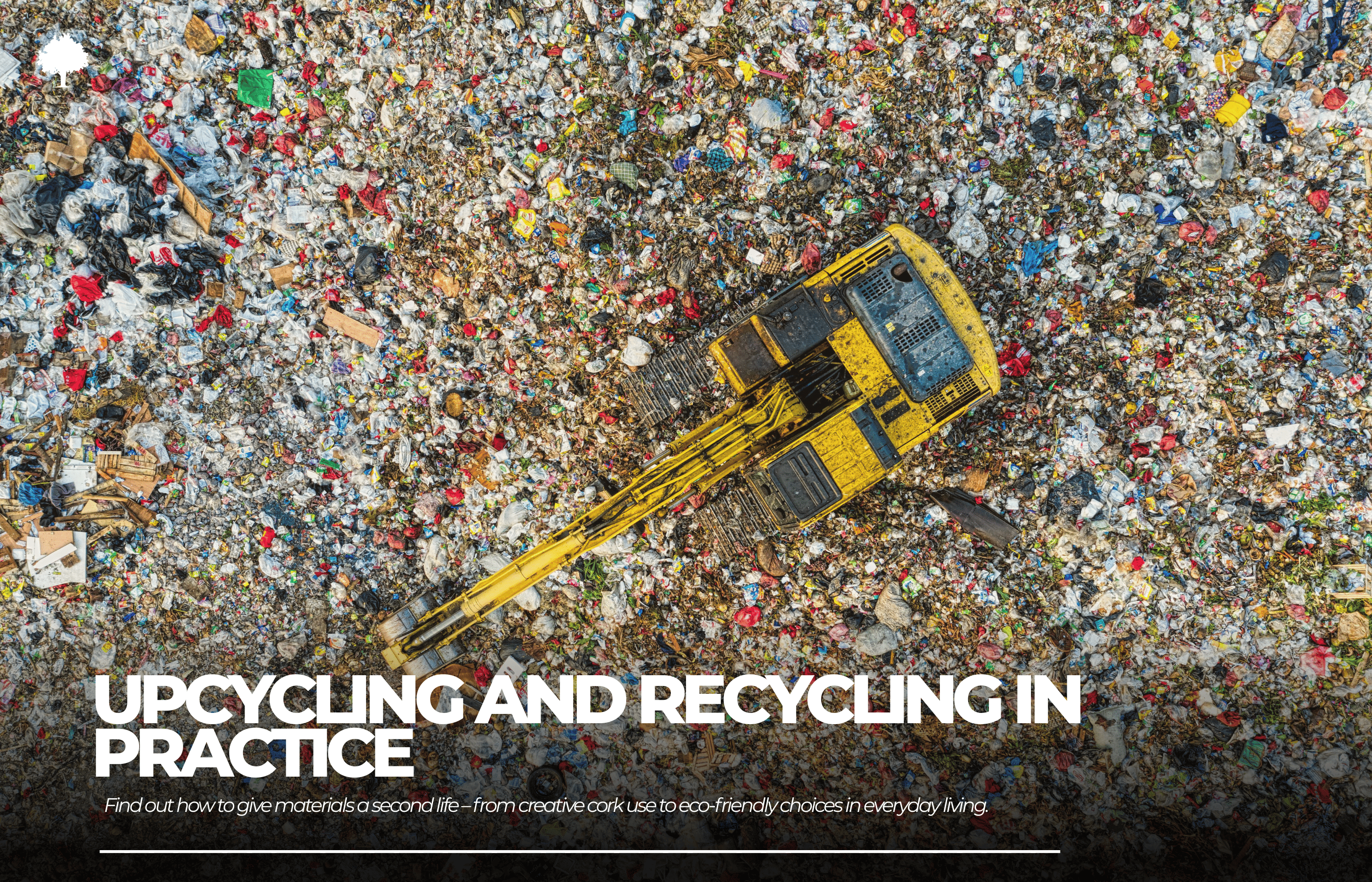
The climate emergency, excessive waste generation, and the gradual depletion of natural resources mean that the way we purchase, use, and dispose of everyday items has a direct and measurable impact on the health of our planet.
Two concepts are becoming increasingly relevant in this context: recycling and upcycling. Although they are often confused or used as synonyms, they differ significantly not only in definition, but above all in their real-world application and environmental consequences.
In this article, we explore how recycling differs from upcycling, identify concrete actions that everyday consumers can take, and explain how to introduce these practices into daily life—without sacrificing style, comfort, or a sense of prestige.
Table of contents
1. Introduction
2. Why are upcycling and recycling so important today?
2. Recycling and upcycling – how do they relate to interior design?
4. Natural cork – recycling potential
5. Summary
6. FAQ
Why are upcycling and recycling so important today?
The difference between recycling and upcycling
Recycling refers to the process of converting used materials into secondary raw materials that can be reintroduced into production and used to create new goods.
Upcycling, by contrast, focuses on creatively repurposing unwanted or worn items into objects with enhanced functional or aesthetic value. A common example is transforming old doors into a statement designer table.
The fundamental distinction lies in the end result: recycling preserves the material itself, but not necessarily its value, while upcycling introduces a new quality and often elevates the object beyond its original form.
The waste crisis and its environmental impact
Each year, the world generates more than 2 billion tonnes of municipal waste, a large share of which ends up in landfills—or, even worse, in natural ecosystems. Plastic debris accumulates in oceans, microplastics infiltrate the food chain, and uncontrolled waste burning releases harmful greenhouse gases into the atmosphere.
Growing consumption, particularly in developed economies, further intensifies the issue. Many products are designed for short lifespans: they wear out quickly or lose their appeal as trends change. This so-called linear economy—the “buy–use–discard” model—places enormous strain on waste systems and accelerates environmental degradation.
How everyday choices can make a difference
Meaningful change starts at the individual level—every purchase is a vote for a specific economic approach. By opting for recycled products, repairing items instead of throwing them away, or supporting brands that champion upcycling, we help shape the entire value chain.
How to apply this in practice?
Incorporating recycling and upcycling into interior design does not require radical changes—thoughtful, intentional choices are more than sufficient:
-
Reclaimed furniture: Restoring old dressers, wardrobes, or tables can give interiors a distinctive personality. High-quality wood from earlier decades often outperforms contemporary mass-produced furniture in both durability and visual appeal.
-
Upcycling materials: Shipping pallets transformed into garden seating, wine crates reused as shelving, old doors repurposed as headboards—the creative potential is virtually limitless.
-
Details and accessories: Lighting made from bicycle components, cushions crafted from recycled linen, rugs woven from reclaimed textiles—these accents add depth and narrative to a space.
What truly matters is not only owning distinctive objects, but also understanding their story. This awareness gives a home authenticity and meaning.
Common mistakes when making choices
Even with good intentions, certain decisions can produce results opposite to those intended:
-
Aesthetics over functionality: Not every reclaimed item is suitable for daily use. An old chair may look impressive, but if it lacks stability, it becomes decoration rather than practical furniture.
-
An overly random style: Excessive eclecticism can turn an interior into a collection of unrelated pieces. Recycled and upcycled elements should complement a clear, cohesive design concept.
-
Lack of material verification: Older paints or varnishes may contain hazardous substances, such as lead. Before refurbishment, it is essential to verify the origin and composition of materials.
What should guide your choices?
An elegant and responsible interior is built on quality, authenticity, and naturalness. When selecting materials and furnishings, it is worth:
-
Choosing natural raw materials – natural cork, wood, linen, stone, wool, or ceramics not only age gracefully, but are also safe for both health and the environment.
-
Supporting local craftsmen and producers – an effective way to strengthen regional economies and acquire truly one-of-a-kind items.
-
Maintaining balance – the goal is not to source everything second-hand, but to thoughtfully combine new and reclaimed elements into a harmonious whole.
Natural cork – recycling potential
Natural cork has earned recognition in recent years not only among interior designers, but also among environmentally aware consumers. It brings together eco-conscious credentials, excellent performance characteristics, and remarkable recycling and upcycling potential.
What is natural cork and where does it come from?
Natural cork is harvested from the bark of the cork oak (Quercus suber), a tree native primarily to the Mediterranean region—especially Portugal, Spain, and Italy. Importantly, harvesting does not involve felling the tree: the bark is removed by hand every 9–12 years, while the tree continues to thrive for decades. This makes cork one of the most sustainable natural raw materials available today.
The inherent properties of cork make it an exceptionally versatile material:
-
it is lightweight, flexible, and resistant to moisture,
-
it naturally offers antifungal and antibacterial protection,
-
it delivers effective thermal and acoustic insulation,
-
it feels pleasant to the touch and conveys visual warmth.
Thanks to these attributes, cork performs well not only as a sealing material (for example in bottles or industrial uses), but also as a decorative and functional element in interior architecture—appearing as wall panels, flooring, accessories, or furniture.
What does cork recycling offer?
Recycling cork is not only an effective way to reduce waste, but also an opportunity to give the material a second life in an environmentally responsible way. Cork is ground and reprocessed into granules that can be used to manufacture, among other things:
-
insulation and acoustic panels,
-
floor underlays and wall coverings,
-
technical cork products,
-
components for furniture and decorative items,
-
as well as everyday items—coasters, notebooks, and even footwear.
Upcycling cork also opens up creative possibilities—such as mosaic wall features or jewellery design.
It is also important to note that cork recycling requires relatively low energy input and avoids harmful chemical processes, making it even more environmentally friendly than conventional recycling of synthetic materials.
Summary
Recycling and upcycling are not fleeting trends, but practical tools in addressing the environmental crisis that—when applied consciously—can become a natural part of everyday life. The distinction between recycling and upcycling—between reusing materials and creatively redefining them—creates space not only for environmental responsibility, but also for aesthetics, individuality, and quality. Change begins with small, intentional choices: selecting materials carefully, rethinking our relationship with objects, and valuing what we already own.
FAQ – Frequently asked questions
1. Is every material suitable for recycling or upcycling?
No. Recycling requires clean materials and appropriate infrastructure. For instance, multilayer packaging (such as juice cartons) is difficult to process. Upcycling, on the other hand, depends on creativity and the technical condition of the material. In practice, wood, metal, glass, natural textiles, and natural cork offer the greatest potential.
2. Does upcycling have to mean a rustic or boho style?
Not at all. While these styles often highlight reclaimed elements, upcycling can also align seamlessly with minimalist, industrial, Scandinavian, or contemporary aesthetics. What truly matters are form, colour palette, and quality of execution—even a recycled item can appear refined and premium.


