
.png)

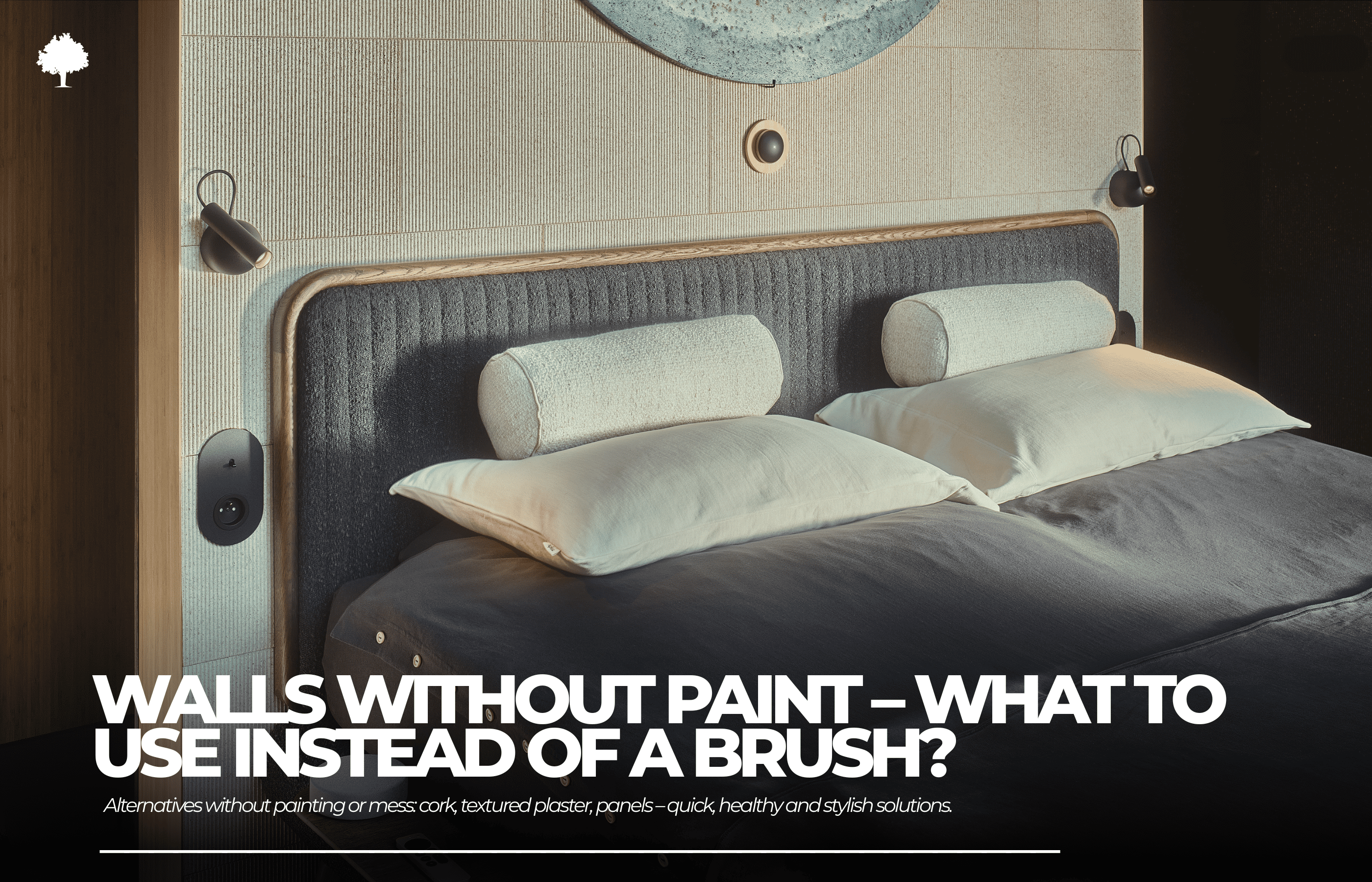
Time has become a true luxury, and for those who prioritise comfort and a high standard of living, every interior choice should combine visual appeal with smart efficiency. Painting walls is often lengthy, disruptive, and doesn’t always produce the expected outcome. Fortunately, there are contemporary, design-focused ways to refresh interiors quickly – without paint rollers, lingering fumes, or putting rooms out of action for days.
In this guide, we explore alternatives that not only speed up the transformation process, but frequently bring an entirely new level of quality to interior design.
Table of Contents
1. Introduction
2. Why traditional painting is losing its appeal
3. The untold downsides of paint
4. What to choose instead of paint? Faster, smarter solutions
5. How to approach the process
6. Summary
7. FAQ
Why traditional painting is losing its appeal
For a long time, paint was seen as the go-to solution for refreshing walls. Today, as expectations around comfort and finish continue to rise, more people are recognising its shortcomings. Above all, painting demands a significant time investment. Even when professionals are involved, it means covering surfaces, moving furniture, waiting for coats to dry, and often making corrections. That’s several days disrupted – something not everyone is willing or able to accept.
Painting also brings unavoidable mess – sanding dust, splashes, and an unpleasant smell that lingers for days. For those who value order and seamless daily routines, this level of disturbance can feel excessive.
Durability is another issue that’s often overestimated. With time, painted walls lose their fresh appearance – scratches emerge, paint chips away, colours fade due to UV exposure, and stains can develop. Even premium paints show signs of wear, particularly in high-traffic areas like hallways, staircases, or children’s rooms. The result is a recurring need for renovation, which ultimately costs time, energy, and money.
The untold downsides of paint – what rarely gets mentioned
For decades, paint was considered the benchmark for wall finishes, yet in reality it comes with a number of drawbacks that are seldom discussed. At first glance, everything seems straightforward: choose a colour, hire a team or do it yourself, and enjoy the refreshed look. But that’s only part of the picture.
Over time, cracks begin to appear – especially along plasterboard joints, around door frames, and in corners. This is a natural consequence of building movement, temperature changes, and humidity fluctuations. Paint doesn’t adapt to these shifts – it cracks, revealing the underlying surface.
Stains are another commonly overlooked problem. In kitchens, bathrooms, or living rooms near windows – anywhere exposed to moisture or steam – paint quickly loses its fresh look. Dull patches, streaks, and in extreme cases peeling surfaces can develop over time.
It’s also worth noting that small touch-ups rarely blend in. Spot repairs usually remain visible as slightly different shades, even when the same paint is used. For those who expect a flawless finish, this often means repainting the entire wall or accepting a visual compromise.
In theory, paint seems like a quick and affordable option. In practice, it often leads to repeated expenses and ongoing frustration.
What to choose instead of paint? Faster, smarter solutions
Thankfully, classic painting is no longer the only way to achieve an attractive wall refresh. For those who want instant results without the mess, a new generation of solutions has emerged – quick to install, visually impressive, and often more durable than paint.
Self-adhesive panels and decorative elements are among the most innovative options available today. Ready to use and requiring no tools or specialist skills, they simply peel and stick directly onto the wall. Available in a wide variety of designs – from 3D geometric patterns to finishes inspired by concrete, wood, or stone – they adapt easily to different interior styles.
Decorative natural cork is an ideal choice for those who appreciate warmth and authenticity. This fully eco-friendly material feels pleasant to the touch and offers both acoustic and thermal benefits. Crucially, it’s also available in self-adhesive formats, making DIY installation possible without drills, dust, or disruption. Natural cork works beautifully as full wall coverage or as accent panels in a home office, bedroom, or living room.
How to get started? Fast, but done properly
Modern wall solutions make it possible to bypass the lengthy stages of traditional renovation, but preparation still matters. In fact, the better the groundwork, the more durable and satisfying the final result will be.
Rule number one: the wall must be clean. Dust, grease, remnants of old paint, or construction residue can all weaken adhesion. Wipe the surface with a damp cloth and a mild detergent, then allow it to dry thoroughly. A clean base is essential for long-lasting results.
Second: smoothness is key. Self-adhesive materials are not intended for heavily textured or structural walls. They adhere best to smooth surfaces such as skimmed walls, plasterboard, or polished concrete. If the surface is rough, light sanding and levelling will significantly improve the outcome without taking much time.
Preparation isn’t wasted effort – it’s an investment in durability. Correctly installed panels or decorative elements can last for years without adjustment or replacement. Proper application also ensures a clean, refined look, free from lifting edges, air bubbles, or misalignment.
Summary
For homeowners who want to avoid mess, paint fumes, and lengthy renovations, traditional painting is increasingly being replaced by modern alternatives. Self-adhesive panels offer fast installation, durability, visual appeal, and everyday comfort – all without disrupting normal life at home.
FAQ
1. Do self-adhesive panels really stay in place?
Yes – as long as the wall is properly prepared: clean, dry, and smooth. High-quality panels use advanced adhesive technologies that ensure long-lasting performance without additional fixing.
2. Can installation really be done without professional help?
Absolutely. This is one of the key advantages of these solutions – no specialist tools or experience are required. Manufacturer instructions are usually clear, and the installation process is intuitive.
3. Will this work in large rooms?
Yes. Modern panels and decorative elements come in modular formats that are ideal for covering larger areas. They can be used on a single feature wall or across an entire room, depending on the desired effect.


