
.png)

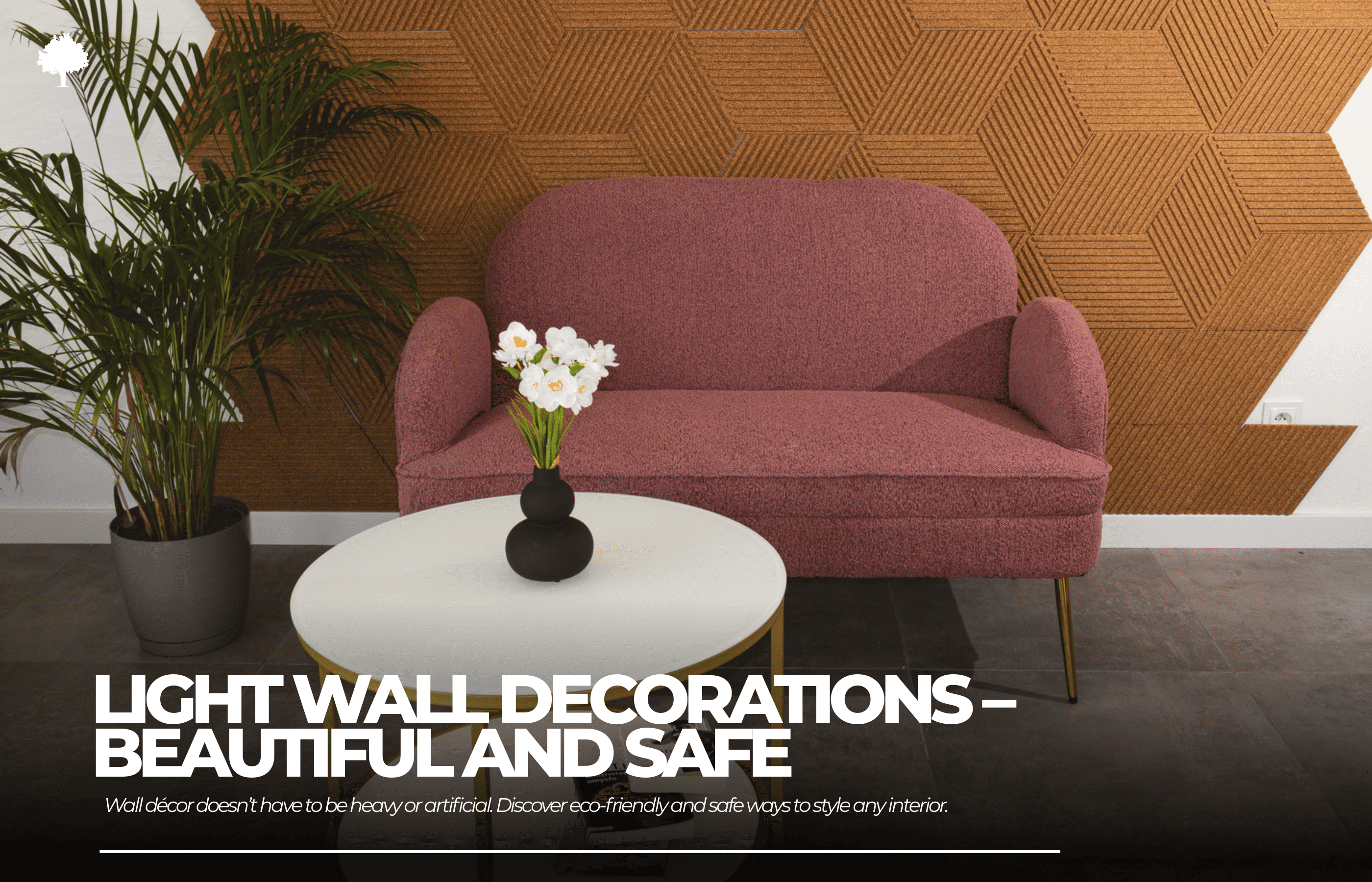
Nowadays, achieving an impressive visual effect doesn’t require drilling or making anything permanent. Decorations can be light in form yet visually impactful – catching the eye, shaping the atmosphere, and bringing order to the room. And the best part? Many of them can be removed, rearranged, or moved to a different space whenever you feel like changing things up.
In this article, we take a closer look at a variety of materials and design ideas for wall décor that effortlessly merge beauty, practicality, and everyday usability.
Table of Contents
1. Introduction
2. Creating impact without heavy décor
3. Materials perfect for lightweight decorations
4. Inspiring ideas for light and effortless wall décor
5. Summary
6. FAQ
Why steer clear of heavy materials?
Although robust frames, metal structures, or thick solid-wood shelves can look striking, they aren’t always the most practical choice for day-to-day living. In many interiors, lightweight décor performs better – in both physical weight and overall form. It’s a stylish, functional, and far more versatile solution.
Technical factors – limits of modern walls
Contemporary buildings often rely on lightweight wall systems, such as plasterboard. While convenient to install, they can only hold limited weight. Hanging heavy décor requires specialist anchors and structural reinforcement, and even then long-term stability isn’t guaranteed. Additionally, every drilled hole leaves marks that are difficult to fully conceal.
Rental living – the need for adaptability
Renters usually can’t make permanent alterations to walls. Many landlords don’t allow drilling, and when the lease ends the property often has to be returned in its original condition. Lightweight décor fixed with double-sided tape, hook-and-loop systems, or adhesive hooks makes it possible to enjoy a stylish home without causing damage or using tools.
Safety in everyday spaces
In rooms used by children or older family members, safety is the top priority. Lightweight décor poses far less risk – even if it falls, it’s unlikely to cause injury. This matters especially in children’s rooms, near beds or desks, or in busy hallways. Natural, lightweight materials – such as natural cork, textiles, or thin decorative panels – are much more suitable than glass, metal, or heavy frames.
A fresh, flexible approach to interiors
Modern interiors favour change and adaptability. Lightweight décor makes it easy to refresh your space without hassle or risk of damage. It’s a great option for those who enjoy seasonal updates, experimenting with styles, or simply prefer not to commit to permanent, difficult-to-move elements.
Materials that work perfectly for lightweight décor
Choosing the right materials is essential for creating décor that is both attractive and practical. For lightweight applications, it’s worth selecting materials that combine low weight with durability, easy installation, and appealing aesthetics. Two standout options – fabrics and natural cork – meet all these criteria.
Fabrics – softness, texture, and endless versatility
Textile décor has long been a favourite for creating light and inviting interiors. Its greatest advantage is its ability to soften a space without overwhelming it. Fabrics can be hung easily without drilling, using rods, adhesive tapes, or hook-and-loop fasteners.
Popular ideas include:
-
boho-style macramé and woven wall hangings,
-
decorative ethnic fabrics or batiks as an alternative to framed artwork,
-
linen or cotton strips with typographic designs,
-
soft textile panels installed with hook-and-loop systems.
Fabrics pair effortlessly with many interior styles – rustic, Scandinavian, modern. Their varied textures and natural softness offer a refined yet understated backdrop for the rest of the décor.
Natural cork – practical and eco-friendly
Natural cork is gaining renewed appreciation as a material for lightweight décor. Once associated mainly with noticeboards, it is now valued as a modern, adaptable, and stylish decorative material.
It is remarkably lightweight, making it ideal for delicate wall structures. Natural cork is flexible and easy to shape, adhering well to surfaces. Its natural properties also provide sound absorption and thermal insulation, enhancing overall comfort indoors.
With its warm spectrum of shades – from light beige to deep brown – and unique, irregular grain, natural cork works beautifully in both nature-inspired interiors and minimalist spaces. Coloured cork panels are available too, allowing you to match the décor to specific design concepts.
Natural cork is used to create:
-
lightweight wall panels – smooth, patterned, or mosaic-style,
-
organisation boards for kitchens, offices, or children’s rooms,
-
decorative geometric pieces and abstract forms.
It’s a material that strikes the perfect balance between visual appeal, practicality, and environmental care – renewable, biodegradable, and entirely natural.
Striking ideas for lightweight décor
Lightweight décor doesn’t mean settling for less. In fact, well-chosen wall accents can stand out even more than heavy, imposing pieces. Success comes down to a thoughtful concept, suitable materials, and deliberate use of space. Below are two proven ways to create eye-catching, non-intrusive wall décor.
Gallery walls without nails
A wall filled with a curated selection of prints, photographs, or posters can instantly introduce personality and depth to a room. And the best part is, you don’t need a hammer or drill to create such a display – there are plenty of alternative mounting options to choose from.
The most popular methods include:
-
double-sided mounting tapes – ideally selected for the weight of the decoration to prevent slipping,
-
self-adhesive hooks and fastening strips – offering adjustable height and easy removal without marks,
-
picture rails or slim ledges – allowing you to swap out the gallery’s contents without altering the entire setup.
These displays look great in living rooms and hallways alike, and their greatest advantage is how easily they can be refreshed – simply replace a poster or add new photos to transform the room’s atmosphere.
Acrylic mirrors – expanding the space visually
Mirrors remain one of the most effective ways to visually enlarge and brighten interiors. Yet traditional glass mirrors are often heavy, fragile, and tricky to install on delicate walls. A smart alternative is acrylic mirrors – lightweight, flexible, and significantly more resistant to damage.
Acrylic sheets come in countless shapes and sizes – from classic rectangles to geometric compositions and mosaic-style arrangements. They can be fixed using mounting tape or a gentle transparent adhesive. Importantly, even if they fall, they do not pose a safety risk, making them ideal for children’s rooms or busy corridors.
Beyond their functional benefits, acrylic mirrors also offer decorative value – reflecting light and surrounding objects in ways that give the room more depth and a sense of airiness.
Summary
When designing interiors, we increasingly look for solutions that are both visually appealing and practical. Lightweight wall décor perfectly answers this need – enabling you to create engaging arrangements without permanently altering your walls or worrying about their load capacity.
Some of the most versatile and practical materials are fabrics, acrylic, and natural cork, each offering a mix of durability, functionality, and distinctive aesthetics. These materials allow for compositions tailored to your interior style, personal needs, and technical constraints – especially helpful in rented spaces or plasterboard constructions.
FAQ – most common questions about lightweight wall décor
1. Do lightweight decorations really stay on the wall without drilling?
Yes, as long as the appropriate mounting system is chosen – such as double-sided tapes, self-adhesive hooks, fastening strips, or specialised adhesives designed for walls. Matching the load capacity to the item’s weight and cleaning the surface beforehand ensures secure installation.
2. What decorations are suitable for a child’s room?
Soft, safe, and lightweight items are the best choice – such as textile macramé, felt or foam panels, natural cork décor, wall stickers, or lightweight plastic photo frames. Glass and heavy metal elements should be avoided.
3. Does natural cork get dirty quickly or require complex maintenance?
No. Natural cork is antistatic, resistant to dust, and naturally moisture-resistant. If needed, it can be cleaned with a damp cloth. Lacquered versions are also available for enhanced stain resistance.
4. Do acrylic mirrors really work like glass mirrors?
Yes, though the reflection may be slightly less deep than in glass. However, acrylic mirrors are much lighter and safer, and they can be easily cut and installed even on delicate partition walls without the risk of cracking.


