
.png)

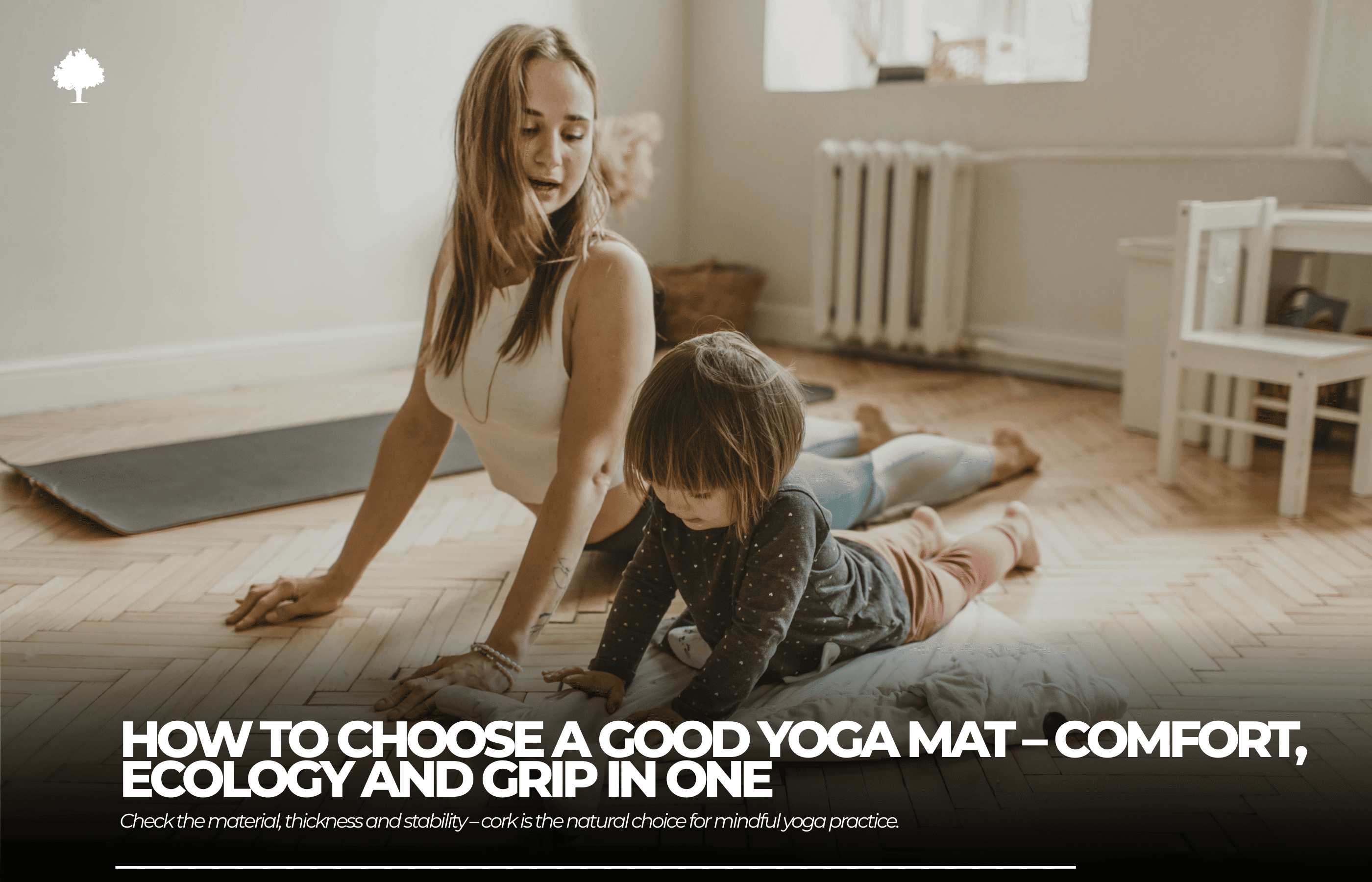
You probably know the scenario: you finally decide to get moving, unroll your mat, sit down for a yoga session… and instead of feeling grounded, irritation kicks in because your hands keep sliding, your knees ache, and the mat itself looks—to put it mildly—uninspiring. Exactly. Picking the right mat is one of those small choices that can make a huge impact, especially if you want to practise consistently and with genuine pleasure.
In this guide, we’ll walk you through what matters when choosing a yoga (or pilates) mat, what you should absolutely avoid, and why ONE PARTICULAR MATERIAL can completely transform your practice. No empty slogans — just practical advice, tried-and-tested solutions, and tips drawn from real-life experience.
Table of Contents
1. Introduction
2. What should you avoid? Mats that don’t work for exercise
3. What to pay attention to when choosing a mat?
4. Meeting your needs: a mat made of…
5. Summary
6. FAQ
What should you avoid? Mats that simply aren’t suitable
Before we move on to the mats worth buying, let’s start with those that can quickly ruin your motivation. Sadly, not every mat advertised as “for yoga” actually works well for it. And since you’ve already taken the first step, it would be disappointing to lose enthusiasm just because you ended up with the wrong gear.
A slippery surface — the quickest way to turn practice into a struggle
There’s nothing more discouraging than a mat on which your hands and feet slip every time you try to hold a pose. A slick surface is a guaranteed source of frustration and stalled progress. It’s nearly impossible to focus on your breath when half the session turns into a battle for balance. Instead of calm and mindfulness, you get tension and disappointment.
Cheap foam pitfalls — mats that warp, slide, and soak up sweat
These mats often attract attention with low prices and bold colours. Unfortunately, they just as quickly find their way to a dusty corner. Slippery foam mats tend to stretch, deform, and shift around the floor.
Too thin? Too thick? How both extremes affect your practice
A mat that’s too thin won’t cushion your joints or protect your knees and hips on hard flooring. One that’s too thick, however, can throw off your balance — your hands and feet sink in, making poses unstable. A well-chosen mat finds that sweet spot: enough support without losing the sense of grounding.
Difficult to clean
If your mat looks worn out after each workout and cleaning it takes more time than the session itself, something is clearly wrong. A material that absorbs sweat and can’t be wiped down easily stops looking appealing fast. And it’s hard to feel good on a mat that resembles an old carpet rather than a piece of exercise equipment.
A heavy mat you end up leaving behind
A sturdy, weighty mat can have its benefits — but only if you never need to carry it. When you start hauling it to classes, to the park, or even between rooms, its weight suddenly becomes a burden. A heavy mat discourages practice. It usually stays at home, and with it… your entire training routine.
What should you look for when choosing a good mat?
Now that the “don’t buy this” list is out of the way, it’s time for what truly matters. What makes a mat reliable? What turns it from a source of irritation into a supportive foundation for your yoga, pilates, or even your morning stretch?
Below is a checklist of qualities that should guide your decision.
Stability is everything — quite literally
This is the number one requirement: your mat must not slide around. It needs to grip the floor and give you confidence that every pose feels firmly supported. Without this, a safe and comfortable practice is out of reach.
Comfort for your hands and feet
It may sound minor, but in practice it’s a huge factor. A mat should feel soft, warm, and pleasant against the skin. Any exercise where your forehead or knees rest on the mat becomes uncomfortable if the surface is cold, hard, or plasticky.
A non-slip surface
Whether you’re on day one or day one hundred, the mat must maintain its grip. A good surface won’t become slippery, even when your hands are slightly sweaty. This gives you both freedom of movement and peace of mind.
Easy to clean and keep hygienic
A good mat is low-maintenance — ideally one you can wipe with a damp cloth, without needing any cleaning products.
Lightweight
Sometimes the biggest obstacle to working out is simply… carrying the mat. That’s why it’s worth choosing a model that’s easy to take to classes, to the park, or even just to another room. A lightweight mat removes one more barrier and makes regular practice far more likely.
Skin-friendly
If you practise often or have sensitive skin, the material matters. Quality mats are hypoallergenic, gentle, odour-free, and breathable.
Insulation from cold floors
This becomes crucial when you practise on tiles, stone, or concrete. Your mat should shield you from the chill of the floor — not only to keep you comfortable, but also to look after your health.
Aesthetics
No, it’s not just vanity. If something is part of your daily self-care routine, it should be pleasant to look at too. A visually appealing mat doesn’t only look nice — it also makes you more inclined to unroll it and begin. Loud, ultra-graphic designs? Fun at first, but they don’t exactly help you switch off or calm your mind.
Natural material
And finally, something that matters more and more: making conscious choices. Mats crafted from natural materials support our mental wellbeing and fit perfectly with the idea of mindfulness and living closer to nature. If yoga is meant to bring balance into your life, it’s worth letting that intention show in the equipment you choose.
Meeting your needs: a natural cork mat
Now that you know what to steer clear of and what a good yoga mat should provide, it’s time for a concrete answer. If you want something that blends comfort, quality, looks, and practicality, it’s worth considering a natural cork yoga mat. It’s not just an eco-friendly curiosity — it’s a solution that genuinely works. And it does so on several levels.
It ticks all the boxes of a good mat
A natural cork mat brings together everything you want from gear that’s meant to stay with you for longer. It is stable and non-slip. The surface offers excellent grip without feeling sticky. This lets you focus on your breath, movement, and the present moment instead of constantly worrying about losing balance.
What’s more, it feels gentle on your skin — it’s warm to the touch, natural, and hypoallergenic. Natural cork has antibacterial properties as well, so hygiene is one thing less to stress about. Cleaning is straightforward: a dry or slightly damp cloth is all you need — no detergents, no heavy scrubbing. Simple, convenient, and effective.
And in terms of comfort? Natural cork combined with a cushioning layer offers good insulation from cold floors while still keeping the mat firm and stable.
It’s practical
A natural cork mat has another key strength: it is lightweight and easy to handle. You can take it to class without effort, roll it out in the garden, or simply move it between rooms. It’s a small detail that makes a big difference once your practice becomes a habit.
If you plan to travel with your mat or carry it to the studio frequently, its low weight matters even more. Often, that one aspect decides whether you actually reach for your mat on a given day.
It’s also aesthetically pleasing
Appearance plays a role too. A natural cork mat with a delicate lotus flower motif simply looks elegant. It’s minimalist, calm, and understatedly natural — it doesn’t distract or dominate the space. It fits seamlessly into a daily routine of mindfulness and self-care.
Summary
A good yoga mat isn’t an indulgence. It’s your base — in every sense of the word. It can either help you fall in love with regular practice or end up abandoned in a cupboard after the very first use.
That’s why this choice is worth a moment of thought. Steer clear of cheap, slippery, and impractical options that hold you back instead of helping. Choose something that truly supports your body, makes it easier to concentrate, and reliably does its job — day after day.
A natural cork yoga mat meets all these expectations. It’s light, stable, non-slip, easy to care for, and pleasant to touch. And on top of that, it looks inviting enough that you actually feel like rolling it out.
If you’re already practising regularly (or just about to begin), this kind of mat can be a small investment with a big payoff: comfort, calm, better-quality practice, and more motivation. After all, it’s not only about exercise — it’s about your time just for you.
FAQ – the most common questions about the natural cork yoga mat
1. How should I clean a natural cork yoga mat?
Gentle care works best — simply wipe it with a dry or slightly damp (not soaking wet) cloth, without using chemicals or detergents. Natural cork doesn’t respond well to vigorous scrubbing or being drenched in water. After cleaning, leave the mat to dry naturally — don’t place it on a radiator or in direct sunlight.
2. Can I use a natural cork mat outdoors?
Yes, definitely. A natural cork mat performs well on many different surfaces. It doesn’t soak up moisture from the ground and still offers solid support. After your session, just shake it off or wipe it down and it’s ready for the next use.
3. Is natural cork really an eco-friendly material?
Yes, and in a very real sense. Natural cork comes from the bark of cork oak trees, which are not cut down in the process. It’s a renewable, biodegradable material that is gentle on the environment. Cork oaks also absorb large amounts of CO₂, meaning that natural cork production has a relatively low carbon footprint. Choosing it supports both your practice and the planet.
4. How should I store a natural cork mat?
The best way is to keep it rolled up, with the natural cork side facing outwards. Avoid storing the mat in damp rooms, in direct sunlight, or right next to heat sources.


