.png)

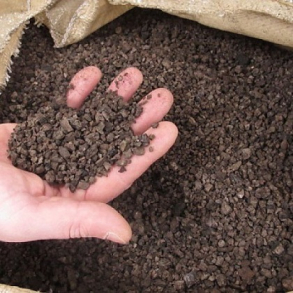
Expanded granulated cork for thermal and acoustic insulation 2-4mm - 120l (0,12m3) - 10kg
Amorim IsolamentosEGC24
- secure payment!
- cheap shipping!
- express delivery!
- cheap shipping!
- express delivery!
In stock
£ 105.13

When it comes to picking the right insulation, thinking just about the short-term can backfire. Cheap options might seem like a bargain, but they often cause problems and extra costs. Plus, not all insulation materials fit every nook and cranny or tick the safety box. That said, expanded cork insulation is a real game-changer – it's durable, water-resistant, reliable, and 100% eco-friendly.

Durable Yet Lightweight

All-Natural Material

High-Quality Insulation

Durable

Reduced Environmental Footprint

Completely Safe
We offer four fractions: 2–4 mm, 2–9 mm, 4–8 mm, and 3–15 mm.
It basically consists of granules of expanded cork – a natural, lightweight insulator that’s even better at doing its job than regular cork.
Expanded cork comes from the bark of cork oak trees and is treated with high heat. The process causes natural cork to puff up and turn dark brown. No chemicals are needed – it’s a totally natural transformation. Cork has a component called suberin that works like glue when heated, which helps it hold its shape.
They’re mainly used in building projects, like:
But they’re also great for non-construction uses, like:
To start with, it offers thermal and sound insulation. It actually performs better than standard natural cork.
Other standout qualities include:
Yes, these granules come with a Polish hygiene certificate granted by the National Institute of Public Health. It confirms they’re non-irritating and non-allergenic. Right now, we’re the only certified supplier of this type in Poland.
Definitely – natural cork is among the most eco-conscious materials. It’s obtained from cork oak bark, and the tree itself isn’t harmed during harvest. The bark regrows naturally every 9 to 12 years, so it can be reused over and over again. These trees can survive for more than 200 years!
Even better, cork boasts a carbon-negative footprint. Cork oaks soak up as much as four times more CO₂ than most other tree species.
Expanded cork granules provide durable insulation – they maintain their qualities for up to five decades.
It’s a deep brown, caused by heating cork at high temperatures. There are no dyes or pigments added. Compared to the typical lighter cork, this version has a more raw vibe.
The 2–9 mm granule size has a density of roughly 70–80 kg/m³.
Cork wins hands down. Foam is synthetic and wears out over time – it may crack or lose air-tightness. Its production also generates a large carbon footprint.
Whereas cork:
It’s best to keep it somewhere dry and airy. Avoid humid basements or tarpaulins in the garden. It also shouldn’t be exposed to heaters or direct sunlight.
To sum up: store them dry, ventilated, and away from heat and sunlight.
There’s a common fear that being eco-conscious means giving up performance. And honestly – your home isn’t the place to take that gamble. But expanded cork is no risky gamble – it’s a tried-and-tested, long-lasting granulate that beats synthetic options hands down. You don’t have to pick between “green” and “getting the job done” – you simply get both.

If you’ve ever used bargain synthetic insulation, you’ll know the issues crop up faster than expected. They might seem cost-effective at first, but often they end up causing more problems than solutions. Expanded cork plays a different game altogether. Once it’s in, it stays put – working effectively for years to come.
Some substances simply aren’t fit for quality granules. Even after grinding, they break down, clump, or compact. Expanded cork stays free-flowing – light, stable, and consistent. It’s not about just cramming something into a gap and hoping. It’s about knowing that even in ten years, it’s still doing the job right.
Our lives are full of plastic, foam, polystyrene and other man-made stuff that eventually gets dumped – or worse, scattered in nature. Most of us don’t realise just how much energy and emissions go into making them. And the payoff? Short-term use with long-term damage. Expanded cork doesn’t mess with the planet – it works alongside it. No waste, no harm – just harmony with nature.
Here’s the strange thing: cork oak trees naturally grow back after harvesting – no cutting, no destruction – and yet, we still fall back on synthetics. Sure, they might look cheaper upfront, but the true price is environmental. Cork changes that. No leftovers, and cork trees soak up loads of CO₂ – actually helping to fight climate change.
Just like corn pops and puffs when it’s heated – cork behaves in a surprisingly similar way (though there’s no oil or microwave involved here).
It starts with the bark of the cork oak. Skilled hands remove it without harming the tree, then it’s exposed to high heat. That’s when the cork cells swell and expand – puffing up much like popcorn does. It also takes on a darker shade. During this process, suberin – a natural plant glue – is released and holds it all together.
This clever transformation gives expanded cork insulation powers. It traps heat better, absorbs noise more efficiently, and is overall much more effective.
Expanded cork granules are light – easy to carry, simple to spread, and perfect for awkward spaces where rigid panels won’t work.
Unlike synthetic materials that might release nasty fumes or cause skin issues, expanded cork is completely harmless. No allergens, no irritation, and absolutely no VOCs to worry about.
| Fraction | 4-8 mm |
| Volume | 120 l (0,12 m³) - 10 kg |
| Colour | Dark brown |
| Material | Expanded cork |
EGC24
In stock
£ 105.13
EGC310
In stock
£ 105.13
EGC315
In stock
£ 105.13
EGC24
- secure payment!
- cheap shipping!
- express delivery!
In stock
£ 169.53
Customers who bought this product also bought
TKS5-20
In stock
£ 72.20
 Secure payments
 always free shipping
 Highest quality
 Satisfaction Guarantee