.png)

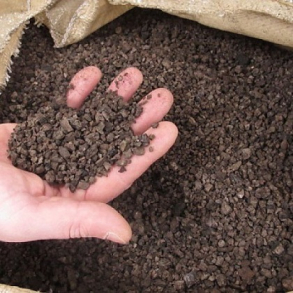
Expanded granulated cork for thermal and acoustic insulation 2-4mm - 120l (0,12m3) - 10kg
Amorim IsolamentosEGC24
- secure payment!
- cheap shipping!
- express delivery!
- cheap shipping!
- express delivery!
In stock
£ 105.13

When you're selecting insulation, it’s smart to think long-term. Bargain options can seem like a win at first, but they often turn into a costly mistake down the road. Plus, not all insulation fits snugly or is entirely safe. But there are materials that break the mould – like expanded cork granulate. Long-lasting, resists damp, holds up well, and comes straight from nature.

Durable Yet Lightweight

Natural

Top Insulation Qualities

Durable

Eco-Conscious Material

User-Friendly and Safe
We offer four fractions: 2–4 mm, 2–9 mm, 4–8 mm, and 3–15 mm.
Small pieces of expanded cork – this lightweight, nature-made material actually performs better than regular cork in insulation.
Expanded cork is produced by heating cork oak bark until it expands and turns a rich brown. No artificial additives are used – the method is entirely natural. It contains suberin, a plant-based resin that acts as a glue when heated, holding the cork together organically.
It's used most often in building work, including:
But it's not just for building – other uses include:
Mainly because of its excellent insulating ability – it blocks heat and noise better than traditional natural cork.
Other useful traits include:
Yes, these cork granules are certified with a Polish hygienic approval from the National Institute of Public Health. They’ve been verified as non-allergenic, non-irritant, and safe to use. We're proud to be the only company in Poland currently holding this certificate.
Yes indeed – cork is one of the greenest materials available. It's harvested from the bark of cork oaks, so there’s no need to cut down any trees. The bark regrows naturally every 9 to 12 years, making it a renewable resource that doesn't harm the tree or the environment. These trees can live for centuries – even over 200 years!
Even better, cork is known for its carbon-negative impact. In fact, cork oaks can absorb up to four times more CO₂ than other tree species.
Expanded cork granules are built to last – their performance can remain effective for up to 50 years.
It has a rich dark brown look, created through high-heat treatment. There’s no added colouring or paint involved.
For grain sizes ranging between 2 and 9 mm, the density falls around 70–80 kilograms per cubic metre.
Yes, we also have expanded cork available in sheet form.
Overall, cork comes out on top. Foam is synthetic and tends to break down with time – it can shift, crack, or lose its insulating seal. Plus, producing foam has a pretty large environmental impact.
Meanwhile, cork:
Store them in a place that’s dry and has good air circulation. Don’t leave them in damp basements or under plastic sheeting outside. Keep them away from heaters and direct sunlight too.
To keep it simple: they should stay dry, well-ventilated, and away from any heat sources or sun exposure.
We sometimes assume that choosing eco options means compromising on quality. And let’s be real – no one wants to test that theory at home. But expanded cork isn’t some wild experiment – it’s a solid, well-proven material that actually performs better than many synthetic alternatives. It gives you both sustainability and efficiency – no need to sacrifice one for the other.

Anyone who’s dealt with budget synthetic insulation knows it doesn’t take long before the problems begin. It might seem like a bargain at first – but later on, it often leads to headaches. Expanded cork tells a completely different story. You apply it once, and it keeps delivering – no top-ups, no fixing, just long-term reliability without the need for chemical enhancers.
Some materials just don’t hold up when turned into granules – they clump, break down, or lose shape. Expanded cork doesn’t do that. It stays loose, stable, and lightweight. Because insulating properly isn’t about a quick fix – it’s about trusting that what’s inside your walls will hold up year after year.
Modern life is filled with plastics, foams and synthetic materials that, after a short life, become waste – sometimes dumped in nature, sometimes burned. Their production also drains resources and emits loads of carbon. The outcome? Short-lived materials that leave a lasting impact. Expanded cork doesn’t add to the problem – it’s a solution that’s kind to the planet and fits right in with natural systems.
Here’s the irony: cork is a renewable material – it regenerates without the need to cut down trees – and still, we fall back on man-made options. While they might seem budget-friendly, their hidden environmental toll is high. Cork changes the equation. It leaves no trace behind, and cork oaks help the Earth by absorbing large volumes of CO₂, actively reducing emissions.
Just like popcorn kernels puff up under heat, cork goes through a similar expansion process. It all begins with the outer bark of cork oak trees. It’s hand-harvested gently, keeping the tree intact, and then heated at high temperatures. At that stage, the cork cells expand – becoming larger and more porous. The heat also darkens the cork and activates suberin – a natural plant resin that binds everything together.
This natural transformation gives expanded cork much better insulation power than raw cork. It becomes more breathable, holds warmth longer, and blocks out sound more effectively.
Expanded cork granules are super light – you can carry and pour them without any hassle. They’re especially handy in spots where traditional insulation boards just won’t work.
And here’s a big plus: expanded cork is completely non-toxic. It won’t irritate your skin, it’s allergy-friendly, and it doesn’t release harmful chemicals or fumes. It’s clean, simple and safe to use anywhere.
| Fraction | 4-8 mm |
| Volume | 2000 l (2 m³) - 140 kg |
| Colour | Dark brown |
| Material | Expanded cork |
EGC24
In stock
£ 105.13
EGC310
In stock
£ 105.13
EGC48
In stock
£ 105.13
EGC315
In stock
£ 105.13
 Secure payments
 always free shipping
 Highest quality
 Satisfaction Guarantee