.png)

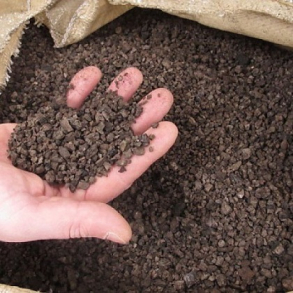
Expanded granulated cork for thermal and acoustic insulation 2-4mm - 120l (0,12m3) - 10kg
Amorim IsolamentosEGC24
- secure payment!
- cheap shipping!
- express delivery!
- cheap shipping!
- express delivery!
In stock
£ 105.13

When choosing insulation, it doesn’t pay to focus solely on the here and now. Low-cost options may seem appealing at first glance, but over time they often lead to issues and added expenses. What’s more, not every insulating material fills gaps effectively or offers a safe solution. However, there are exceptions to this rule – such as expanded cork granules. Durable, moisture-resistant, stable, and 100% natural.
Lightweight and Durable

Completely Natural

Excellent Insulation

Durable Material

Reduced Carbon Footprint

Safe to Use
We offer four fractions: 2–4 mm, 2–9 mm, 4–8 mm, and 3–15 mm.
It’s a “crushed” form of expanded cork – a lightweight, natural material with even better insulating properties than standard cork.
Expanded cork is made from natural cork (the bark of the cork oak tree) that has been exposed to high temperatures. During this process, the cork begins to expand and takes on a deep brown colour. No chemicals are added during heating – the entire process is 100% natural. Cork contains a substance called suberin, which acts as a natural adhesive and is released when the cork is heated.
Most commonly, they’re used in construction applications, such as:
Expanded cork granules also have various non-construction uses, including:
First and foremost, it provides very good insulation – both thermal and acoustic. In fact, its insulating performance surpasses that of standard cork.
Other benefits include:
Yes, the product holds a Polish hygienic certificate issued by the National Institute of Public Health, confirming that the granules are non-allergenic, non-irritating, and free from any side effects. At present, we are the only company in Poland to have received this certification.
Absolutely – natural cork is one of the most environmentally friendly materials available. It’s harvested from the bark of the cork oak tree, which doesn’t require cutting the tree down. The bark naturally regenerates every 9 to 12 years, allowing it to be harvested repeatedly without harming the tree or the ecosystem. Cork oaks are long-living trees – some can live for over 200 years.
What’s more, cork has a negative carbon footprint. Cork oak trees absorb up to four times more CO₂ than other types of trees!
Expanded cork granules offer long-lasting insulation – they can retain their properties for up to 50 years.
It’s dark brown – a result of heating the cork at high temperatures. It isn’t dyed or painted. Compared to classic light beige cork, expanded cork has a more raw appearance.
For the 2–9 mm fraction, the density is approximately 70–80 kg per cubic metre.
Yes, we also offer expanded cork in sheet form.
Cork performs significantly better overall. Foam is a synthetic material that tends to degrade over time – it can settle, lose its airtightness, or break down. Its production also comes with a high carbon footprint.
Cork, on the other hand:
The best way to store them is in a dry, well-ventilated space. Avoid keeping them in damp basements, under tarpaulins outdoors, or in non-breathable bags. It’s also important to ensure they’re not exposed to direct sunlight or heat sources.
In short: keep them dry, airy, and away from radiators and sunlight.
We often worry that eco-friendly means less effective. And let’s be honest – your home isn’t the place for experiments. But expanded cork is no experiment – it’s a proven, durable and highly functional granulate that outperforms synthetic alternatives. With it, you’re not forced to choose between “eco” and “effective” – because you get both in one.

If you’ve ever dealt with cheaper synthetic insulation materials, you’ll know the problems start sooner than expected. Sure, they’re affordable at first – but over time, they often do more harm than good. Expanded cork is a completely different story. It performs reliably for years. You pour it in once – and that’s it, job done. It maintains its quality and performance without the need for additives, adhesives, or binders.
Some materials simply aren’t suitable for making high-quality granules. Even when crushed, they crumble, break apart, or clump together. Expanded cork doesn’t clump – it retains its lightweight, stable structure. Because it’s not just about filling a space and hoping for the best. It’s about being confident that five or ten years from now, it will still be doing its job just as well.
Every day, we’re surrounded by tonnes of plastic, foams, polystyrene and synthetic materials that, once used, end up in landfills – or worse, scattered across forests. It’s easy to overlook, but their production leaves a massive carbon footprint and consumes huge amounts of energy. And the result? Short-lived performance and long-term problems. Expanded cork doesn’t pollute – it supports the environment. It works in harmony with nature and leaves no waste behind.
It’s one of the great paradoxes of our time: we have a natural alternative growing in cork oak forests – self-renewing without logging and effective for decades – and yet we still turn to synthetic substitutes. On the surface, they may seem “cheaper”, but the real cost is paid by the planet. Natural cork solves this problem. It doesn’t create waste, and cork oak trees absorb vast amounts of CO₂, actively contributing to the fight against climate change.
Just like a corn kernel expands under high heat, becoming light, airy and crisp – something very similar happens with cork (minus the oil and microwave, of course).
It all begins with the bark of the cork oak. It’s carefully stripped by hand – without harming the tree – and exposed to very high temperatures. At this point, the cork cells begin to expand – they puff up, just like popcorn. The cork also darkens in colour. During this process, suberin, a natural plant-based “glue”, is released. It binds the structure together.
Thanks to this transformation, expanded cork has far superior insulation properties compared to untreated, standard cork. It’s more porous, retains heat more efficiently, and provides even better sound insulation.
Expanded cork granules are lightweight – easy to carry and pour without heavy lifting or putting strain on the structure. They work brilliantly in places where boards or mats simply don’t fit.
Unlike many synthetic materials, which can emit harmful fumes or contain irritating substances, expanded cork is 100% safe. It’s non-allergenic, non-irritating, and free from volatile organic compounds (VOCs).
| Fraction | 3-15 mm |
| Volume | 250 l (0,25 m³) - 18 kg |
| Colour | Dark brown |
| Material | Expanded cork |
EGC24
In stock
£ 105.13
EGC310
In stock
£ 105.13
EGC48
In stock
£ 105.13
EGC315
In stock
£ 105.13
 Secure payments
 always free shipping
 Highest quality
 Satisfaction Guarantee