FREE SHIPPING FOR ALL ORDERS. ORDER NOW!

Currency:

Granulated cork insulation

When we think about effective insulation, we usually picture large, heavy boards. But what if the space is irregular or full of hard-to-reach corners? Where boards fall short, Expanded Cork Granules step in. Effective, lightweight, easy to adapt, and, of course, completely natural. It’s the ideal solution for anyone facing the challenge of insulating awkward, inaccessible areas and wanting to get the job done quickly.


You probably have a few questions — we’ve got the answers!

WHAT ARE EXPANDED CORK GRANULES USED FOR?

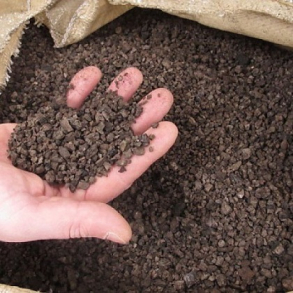
It’s an insulating granulate designed for filling cavities and voids. Made from the bark of the cork oak — the same natural material used for wine stoppers or pin boards — it expands when exposed to high temperatures, increasing its volume. As the granules swell, they darken and develop enhanced thermal insulation properties. No synthetic binders are used in the process: heat releases suberin, a natural component of cork bark, which acts as a binding agent.

WHERE DOES EXPANDED CORK GRANULAR INSULATION WORK BEST?

Expanded cork granules are used wherever traditional insulation boards fall short — in irregular spaces, floor voids and hard-to-reach recesses.


It’s a great choice if you:

  • have a loft with awkward corners that are difficult to insulate using conventional materials,
  • have empty cavities in walls or ceilings that can’t easily be filled with boards (such as cavity walls, internal double walls or insulated partitions),
  • have a pitched roof and want to fill the space between the beams,
  • have voids beneath the floor that are difficult to insulate,
  • need to top up insulation, fill gaps or level out areas where standard insulation simply doesn’t work.

Keep in mind, however, that cork granules are not a structural material — they won’t replace a screed or rigid board. They’re also not suitable where a perfectly smooth finished surface is required.

If you’re not sure whether cork granules are right for your project, just get in touch — we’ll be happy to help!

WHY IS EXPANDED CORK INSULATION CONSIDERED ONE OF THE MOST EFFECTIVE MATERIALS?

First of all, it insulates against both heat and sound even more effectively than standard cork. Secondly, it comes with a range of additional qualities that make it efficient, user-friendly and highly practical.


It’s a material that:

  • doesn’t add unnecessary load to the structure thanks to its lightweight nature,
  • is resistant to mould, fungi and insects,
  • doesn’t settle over time, so you don’t lose insulation performance after a few years,
  • is natural and biodegradable.

MINERAL WOOL GRANULES OR CORK GRANULE INSULATION — WHICH IS BETTER?

From our experience, expanded cork clearly outperforms mineral wool in real-world applications.

Expanded cork is a highly effective insulation material — it provides excellent protection against heat loss and noise. It doesn’t absorb moisture, doesn’t settle over time and retains its properties for many years, keeping the insulation durable and stable. Mineral wool may be cheaper, but it often loses its performance much faster than cork.

On top of that, expanded cork is completely natural, renewable and safe for health. It releases no toxins or irritating fibres, and its production has a significantly lower carbon footprint compared to mineral wool.


Expanded cork granules are ideal for situations where standard insulation boards fail — in hard-to-reach areas, irregular recesses and floor or ceiling voids. Thanks to their loose form, they easily fill even the most challenging spaces, without the need for cutting, gluing or forcing the material into place.


What’s more, its performance doesn’t fade after just a few seasons. Expanded cork granules retain their properties for decades — often quoted at around 40–50 years, with no need for replacement. Very few insulation materials can claim that kind of longevity. Most alternatives lose effectiveness, settle over time or require refurbishment, while cork remains stable and fully functional for decades.


And that’s not all. Sustainability isn’t just a buzzword — it’s a real, tangible value. In the case of expanded cork, that value is easy to measure. Cork is harvested from the bark of cork oak trees without cutting them down. The bark regenerates every 9–12 years, meaning a single tree can provide raw material for over 200 years of its lifespan. On top of that, cork has a negative carbon footprint: cork oak trees absorb up to four times more CO₂ than other deciduous trees, actively contributing to the fight against global warming.

Secure payments
always free shipping
Highest quality
Satisfaction Guarantee