


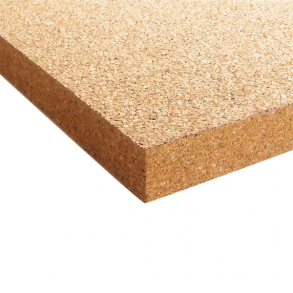
Coarse-grained agglomerated cork board 10x640x950mm
Cork MinistryAK26-10
- secure payment!
- cheap shipping!
- express delivery!
- cheap shipping!
- express delivery!
In stock
£ 78.25
Do you need a very thin layer of cork, but find that most rolls seem too thick for your project? Would you also rather avoid buying adhesive separately and applying it to the surface yourself? That is completely understandable – not every installation should mean extra work and mess. The 0.8 mm Self Adhesive Cork Roll solves both problems at once. It is the thinnest option of all the rolls available, and the adhesive layer is already applied. Sounds simple? That is exactly how it should be! Read on to find out where the 0.8 mm roll works best.

Natural Material

Self Adhesive Layer

Surface Protection

Safe

Multiple Uses

Antistatic Surface
It is a very good choice if you need an extra thin layer of cork that will not noticeably increase the thickness of your project. A 0.8 mm roll works particularly well as a natural surface finish, veneer or light protective layer.
You can use it, among other things:
A roll is a better option when you want to cover a larger surface and reduce the number of visible joins. A single longer roll of cork creates a more uniform finish than several smaller sheets fitted next to one another.
Sheets, on the other hand, are more convenient for smaller projects where the material needs to be cut into small pieces and the joins are not particularly important. The choice therefore depends mainly on the size of the surface and the effect you want to achieve.
Above all, it makes installation quicker and easier. You do not need to buy adhesive separately, apply it to the surface or wait until everything is ready for fitting. Simply peel off the protective film and attach the cork in the chosen place. It is a really convenient solution if you want to avoid extra work and mess.
The most important thing is that the surface is smooth, even, dry, clean and free from dust. Otherwise, the adhesive may not bond properly, and the cork could start to peel away over time. Do not apply it directly to surfaces such as old wallpaper, crumbling plaster or an uneven wall.
Remember to acclimatise natural cork. Leave it for 72 hours in the room where it will be installed. During this time, the material will adjust to the temperature and humidity in the room. Do not skip this step – from experience, we know it is better to wait than to deal with the cork peeling away later.
No. A 0.8 mm layer is too thin to hold drawing pins securely. To make a cork pin board, it is better to choose a roll between 5 and 10 mm thick. You should also make sure there is a suitable backing beneath the cork, such as fibreboard.
Yes. It is best to use paints for cork.
Cork has natural insulating properties, but at a thickness of 0.8 mm, the effect will be limited. A roll of this thickness is best used as a decorative, protective or finishing layer. Once applied to a wall, the cork will feel warmer and more pleasant to the touch than a cold, bare surface. However, this does not mean it can replace a layer of thermal or acoustic insulation.
If your main priority is reducing heat loss or soundproofing a room, choose a much thicker material – ideally over 10 mm – or cork designed specifically for insulation, such as expanded cork or thermal insulation panels.
Not every project needs a thick layer of cork. Sometimes, what matters most is the finish, the natural texture and a material that will not noticeably increase the thickness of the surface. The 0.8 mm Self Adhesive Cork Roll was created with exactly these situations in mind.

The 0.8 mm self-adhesive cork is useful wherever you need a thin finishing layer. You can use it on walls, furniture, shelves, inside drawers or for DIY projects. It does not noticeably increase the thickness, making it a great choice wherever every millimetre matters.
Another major advantage is how easily it can be adapted to a specific idea. A roll creates fewer joins than sheets, which is particularly important when working with longer and wider elements.
Cork works particularly well in interiors where you want to create a warmer, more natural feel. It does not need prints or additional patterns – its texture is a finish in its own right.
Cork is harvested from the bark of the cork oak without cutting down the tree. Once the bark is removed, the tree continues to grow and gradually produces a new layer. This means the material comes from a renewable source that can be harvested again. It is a completely different story from the production of synthetic materials.
With standard installation, you first need to choose the right adhesive, buy it, prepare the tools and spread everything evenly across the surface. You also have to make sure you use neither too little nor too much adhesive. It is manageable, of course, but what if you simply do not have the time?
With the self-adhesive version, that problem disappears. The adhesive is already applied to the cork, so you simply peel off the protective layer and start fitting it straight away. There is less preparation, less mess and fewer things that can go wrong. The surface still needs to be properly prepared, of course, but the installation itself is much quicker and easier.
| Format | Roll |
| Shade | Natural |
| Width | 1 m |
| Thickness | 0,8 mm |
| Material | Natural cork |
| Adhesive layer | Yes |
| Possibility of return | no return possible (custom made product) |
AK26-10
In stock
£ 78.25
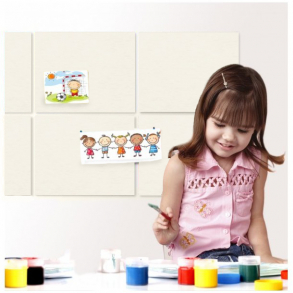
AK-12/10-HTP-UM
In stock
£ 98.81
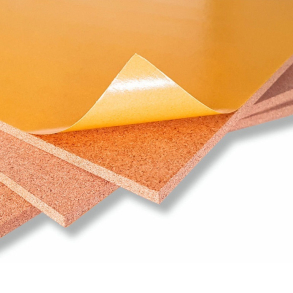
AK-12/7-HTP
In stock
£ 81.03

AK12-10S
In stock
£ 83.55
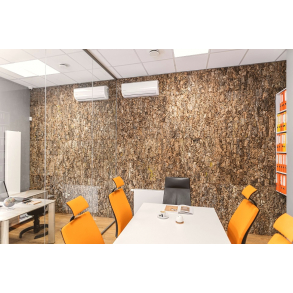
PD-V2
In stock
£ 115.55
C001
In stock
£ 14.59 for 5 pcs.

KTK-?
In stock
£ 68.30
RK-10U
In stock
£ 119.50
 Secure payments
 always free shipping
 Highest quality
 Satisfaction Guarantee