



Best-selling Cork Products "Basic" Sample Set - about 30 pcs.
Cork MinistryZPM
- secure payment!
- cheap shipping!
- express delivery!
- cheap shipping!
- express delivery!
Delivery time: 1 week
£ 92.84
Expanded cork granules look quite different from ordinary cork. They are darker and have an irregular, porous structure. But how can you tell if it is right for your project without seeing the material in person? A 50 ml sample of Expanded Granulated Cork gives you the chance to examine the grains up close, feel their texture and see how they settle into a space.

50 ml Trial Sample

Natural Expanded Cork

Feel The Texture

See The Dark Colour

Compare

Check Before Buying
A 50 ml sample allows you to have a closer look at expanded cork before ordering a larger quantity. You can examine the grains, feel their texture and see their distinctive dark brown colour.
Expanded Granulated Cork is a 100% natural material produced by heating cork at high temperatures. This process gives it a dark colour and a porous structure. It is mainly used for insulation, particularly for filling cavities, gaps and spaces where traditional insulation boards are difficult to install. It can also be used in decorative projects and model making.
Yes. The 50 ml sample contains the same expanded cork granules as the corresponding full-size product. You receive the same material, simply in a smaller quantity and different packaging.
Rather than relying on product photos, you can examine the material yourself. A 50 ml sample lets you see the grains up close and get a better idea of whether they suit your intended use.

Perhaps you are planning to fill a narrow space or use expanded cork in a decorative project. Either way, it helps to know what the granules are actually like. A small sample allows you to examine the material before ordering a whole bag.
Pour the granules into a container, feel how light they are and see how the individual pieces settle together. This makes it easier to choose the material that best matches your plans.
Expanded Granulated Cork is a natural insulating material made by heating cork at high temperatures. The process gives the granules their characteristic dark brown colour, porous structure and exceptionally low weight. It is commonly used for thermal and acoustic insulation in buildings.
Its loose form makes it particularly useful for filling cavities, gaps and awkward spaces where traditional insulation boards may be difficult to fit. Beyond construction, expanded cork granules are also used in model making, decorative projects and as a natural-looking material for miniature landscapes.
ZPM
Delivery time: 1 week
£ 92.84
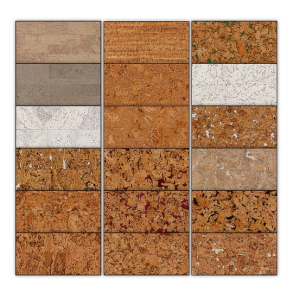
ZPD
Delivery time: 1 week
£ 107.43
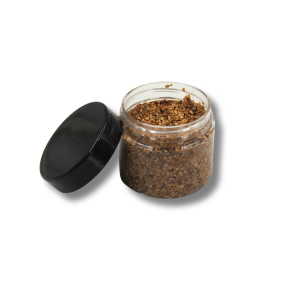
SMP-JR-0050-BO-1
In stock
£ 57.36
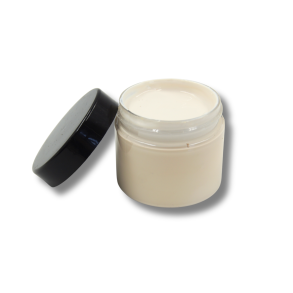
SMP-JR-0050-WA-1
In stock
£ 57.08
 Secure payments
 always free shipping
 Highest quality
 Satisfaction Guarantee