


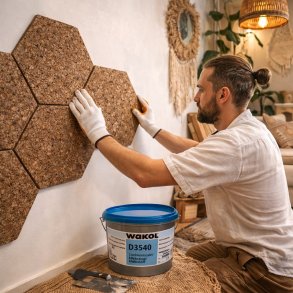
Cork contact adhesive Wakol D 3540 0,8kg
WakolD3540-0,8
- secure payment!
- cheap shipping!
- express delivery!
- cheap shipping!
- express delivery!
In stock
£ 74.72
Polystyrene is still the obvious choice for many people because it is inexpensive and widely available. But low cost is not always the only priority. If you want to reduce heat loss, limit unwanted noise and move away from synthetic insulation, there is another option. Expanded Cork Insulation is made entirely from natural cork and this particular product comes as a substantial 300 mm-thick block rather than a standard thin board. Its thickness makes it suitable for applications where a much more substantial layer of natural insulation is required. If cold surfaces, poor acoustic comfort or synthetic materials are things you would rather avoid, expanded cork is well worth considering. Below, we explain how this thick cork block works and where it can be used.

Natural Cork Insulation

Comfort Through Every Season

Lower Heating And Cooling Costs

Without Synthetic Adhesives

Thermal And Acoustic Comfort

Designed To Last For Decades
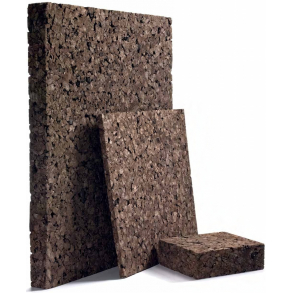
Expanded cork is a fully natural insulation material, and in this case it comes as a block. It is produced from cork granules that are heated to temperatures exceeding 350°C. Under this heat, the granules expand considerably, in a process often compared to popcorn popping. The result is a distinctive porous structure containing millions of microscopic air-filled cells. These trapped air pockets are what give expanded cork its insulating ability – helping to slow heat transfer while also absorbing and reducing sound.
A thick expanded cork block is intended for situations where you need a substantial layer of insulation rather than a thin cork covering. It can help address problems such as significant heat loss, cold building elements, rooms that overheat in summer, or unwanted noise and echo.
Unsure whether such a thick expanded cork block is right for your project? Get in touch with us. Tell us what you want to insulate and what problem you are trying to solve, and we’ll help you work out the most suitable solution.
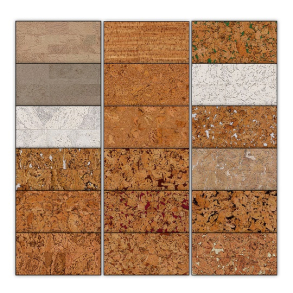
The cork used in familiar products such as laminate underlays, decorative wall coverings and conventional cork boards is usually agglomerated cork. It is produced by combining cork granules with a binder or adhesive. This type of cork is generally lighter in colour and has a more even, smoother surface, which makes it particularly suitable for finishing walls and floors. Its main role, however, is not intensive thermal insulation.
Expanded cork is produced differently and has a very different appearance. It is dark, often almost black, with a visibly open and porous structure. Its insulation performance is also higher than that of standard agglomerated cork. This particular product is supplied as a block, so it is intended for applications where a thick layer of insulation is required rather than a thin decorative covering.
Yes. Leave the expanded cork in the room where it will be installed for approximately 72 hours beforehand. This gives the natural material time to adjust to the temperature and humidity of its new environment. Installing cork immediately after delivery can lead to slight expansion or contraction later. Allowing the block to acclimatise beforehand helps minimise these dimensional changes.
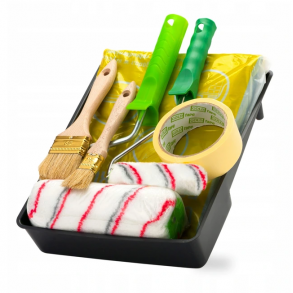
Yes. For the best result, we recommend using dedicated paint for cork, although a good-quality wall paint can also be suitable.
Bear in mind that expanded cork has a naturally open, uneven and porous surface. Because of this texture, the finished coat may not look completely smooth or perfectly uniform, even when the paint is applied carefully.
Is your home still difficult to keep warm despite regular heating? Cold walls and rapid heat loss can make rooms feel uncomfortable while energy costs continue to rise. A substantial 300 mm expanded cork block is designed for situations where you need a much thicker layer of natural insulation and want to improve thermal comfort without relying on conventional synthetic materials.

Expanded cork helps slow down the movement of heat through the building structure, making it easier to maintain a more comfortable and consistent indoor temperature. During winter, it helps keep warmth inside, while in summer it can reduce how quickly interiors overheat. This can lower the amount of energy needed for heating and cooling throughout the year.
Its long service life is another important advantage. Expanded cork can continue to perform for several decades, often for around 50 years. With a thick 300 mm block, you are creating a substantial insulation layer that can remain effective for years without the need for frequent replacement or repair.
Expanded cork is unusual among insulation materials because it is 100% natural. The block is formed from cork granules without added synthetic adhesives or artificial resins. It does not release harmful substances and does not generate dust in normal use, making it a good option for interiors where the quality of the indoor environment matters, including homes with children or allergy sufferers.
When choosing insulation, it is worth considering more than thermal performance alone. Materials remain part of the building for many years, so their composition matters too. If you prefer to limit the amount of synthetic material used in your home, a natural cork block offers a very different alternative to conventional insulation products.
Cork is a renewable material with strong environmental advantages. It is harvested from the outer bark of the cork oak without cutting the tree down, and the bark grows back naturally. During the regeneration process, cork oaks absorb increased amounts of carbon dioxide, which contributes to the relatively low carbon footprint associated with cork production.
That makes it very different from polystyrene and mineral wool, which require energy-intensive industrial manufacturing. Expanded cork starts with a renewable natural raw material and does not need synthetic binders to form the block. Its environmental credentials come from the material itself, rather than simply from an “eco-friendly” label.
| Format | Block |
| Colour | Dark brown |
| Length | 1000 mm |
| Width | 500 mm |
| Thickness | 300 mm |
| Material | Expanded cork |
| Installation | Glue |
D3540-0,8
In stock
£ 74.72
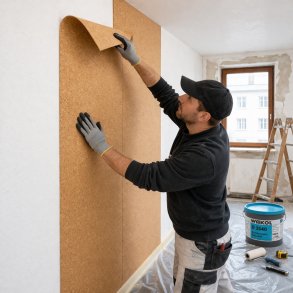
D3540-2,5
In stock
£ 99.72
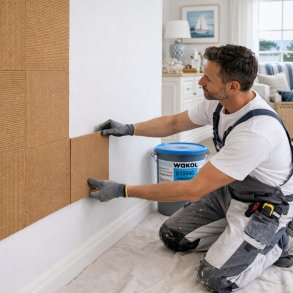
D3540-5,0
- secure payment!
- cheap shipping!
- express delivery!
In stock
£ 130.09
041004005
- secure payment!
- cheap shipping!
- express delivery!
In stock
£ 99.72
3083
- secure payment!
- cheap shipping!
- express delivery!
In stock
£ 65.94

ZPM
Delivery time: 1 week
£ 92.84
ZPD
Delivery time: 1 week
£ 107.43
Customers who bought this product also bought
D3540-2,5
In stock
£ 99.72
KE-100MD
- secure payment!
- cheap shipping!
- express delivery!
In stock
£ 136.98
KE-20-HD
In stock
£ 84.97
3083
- secure payment!
- cheap shipping!
- express delivery!
In stock
£ 65.94
 Secure payments
 always free shipping
 Highest quality
 Satisfaction Guarantee